How to Mix Concrete by Hand: Pro Tips
Hand-mixing concrete is often viewed as basic grunt work, but any seasoned concrete contractor will tell you it is essentially a chemistry experiment performed with heavy tools. Hitting the perfect water-to-cement ratio ensures maximum compressive strength, while poor technique leads to a weak, crumbly mess that will crack after its first winter freeze. Whether you are setting fence posts, pouring a small equipment pad, or patching a driveway, mastering the hand-mix is a foundational skill for tradespeople and serious DIYers.
This guide breaks down the professional methods for mixing concrete by hand. We will cover the specific tools you need, the exact techniques to achieve the ideal slump, and the common pitfalls that compromise a pour.
Overview: The Science of the Mix
Concrete does not "dry" out; it cures through a chemical reaction called hydration. When water meets Portland cement, it triggers crystallization that binds the sand and gravel aggregate together into a solid mass. This process requires a very specific amount of water. Too little water, and the cement fails to hydrate completely, leaving dry, unbonded pockets. Too much water spreads the cement paste too thin, pushing the aggregates apart and dramatically dropping the final Pounds per Square Inch (PSI) rating.
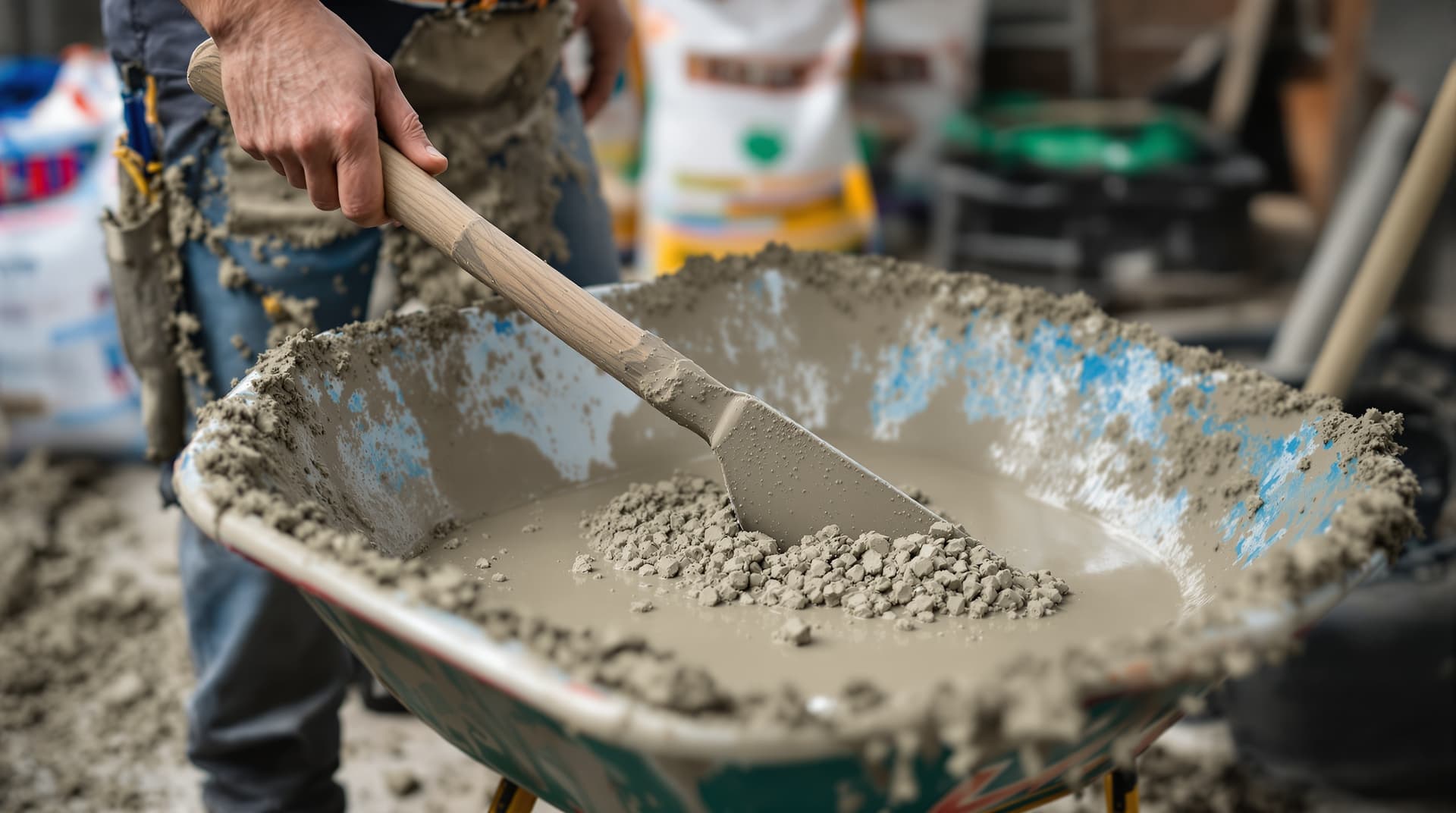
A standard 80-pound bag of high-strength concrete mix typically requires roughly 3 to 4 quarts of clean water. The exact target consistency should resemble thick oatmeal or peanut butter—it should hold its shape when you slice a trowel through it, rather than slumping into a puddle.
When and Why to Hand-Mix Concrete
Knowing when to mix by hand versus when to call a ready-mix truck or use a mechanical mixer comes down to volume, accessibility, and time.
The Rule of Thumb: Most professionals draw the line for hand-mixing at around 10 to 12 bags (80-lb size). An 80-lb bag yields about 0.6 cubic feet of concrete. A 10-bag pour is roughly 6 cubic feet, which equates to a small 3x5-foot slab at 4 inches thick. Anything up to this size is highly efficient to mix by hand in a wheelbarrow. If you cross the 15-bag threshold for a single project, it is time to look into small portable cement mixers to save your back and maintain a consistent wet edge.
Hand-mixing is also mandatory in tight access areas where you simply cannot maneuver heavy equipment, such as deep crawlspaces, indoor basement patches, or terraced backyard retaining walls.
Comparisons and Options: Choosing Your Mixing Vessel
You have three primary options for mixing concrete by hand. Choosing the right one depends on your physical space and the volume of the pour.
The Contractor Wheelbarrow
A heavy-duty 6-cubic-foot steel or high-density poly wheelbarrow (like those made by Jackson or True Temper) is the undisputed gold standard for hand-mixing. A wheelbarrow allows you to mix two 80-lb bags simultaneously and immediately transport the heavy wet mix straight to your forms. Look for dual front wheels if stability on uneven ground is a priority.
The Heavy-Duty Mixing Tub
Large plastic mixing tubs (commonly black MacCourt or Plasgad tubs found at builder supply yards) are excellent for stationary mixing. They are low to the ground, which makes hoeing easier on the shoulders, and they feature molded volume markers. Use these when you are pouring directly adjacent to the tub, as you will have to shovel the wet mix out of it.
The Tarp Method
For back-country jobs or situations where you have zero tools, placing the dry mix on a thick poly tarp, adding water, and having two people alternately lift the corners to roll the mix over itself works remarkably well. While it sounds primitive, the "tarp roll" is highly effective for maintaining strict water ratios without losing cement paste to the porous ground.
Pro Tips for the Perfect Mix
Contractors do not just dump water onto a pile of dust and start hacking away. There is a precise sequence to mixing that prevents dry pockets and limits physical fatigue.
- Use a Mortar Hoe: Put the flat shovel away for the actual mixing phase. You need a forged steel mortar hoe—the specific tool with two large holes in the blade. These holes allow the heavy aggregate to flow through the blade, blending the mix significantly faster with half the physical effort.
- Prime the Tub: Always add about an inch of water to the bottom of your wheelbarrow or tub before dumping the dry bag. This creates a wet base and prevents the dry powder from chemically welding itself to the bottom corners of your wheelbarrow.
- The Crater Method: Once the dry mix is in the tub, use your hoe to pull the material to the sides, forming a deep crater in the center. Pour 75 percent of your total required water into this crater.
- Chop and Pull: Work from the outside in. Pull the dry mix from the edges into the central water pool. Use a chopping motion with the mortar hoe to break up clumps, then drag the hoe the full length of the tub. Push it back, flip the material, and repeat.
- Add Water Incrementally: Once the initial water is absorbed, add the remaining water in very small, cup-sized increments. The transition from perfectly workable to a ruined, soupy mess can happen with just one excess pint of water.
Once your project is poured and fully cured, you will likely need to mount hardware, brackets, or base plates to your new slab. Securing baseplates requires mechanical fasteners, and utilizing proper heavy-duty residential anchors will guarantee your hardware does not pull out under load. To install those fasteners properly, you will also need the right rotary hammer setup specifically designed for drilling into poured concrete walls or heavily reinforced slabs.
Common Mistakes to Avoid
Amateurs consistently make the same errors when mixing concrete. Avoid these at all costs to ensure structural integrity.
- The Soupy Mix (Overwatering): This is the number one mistake. Adding extra water makes the concrete easier to mix and pour, but it destroys the chemical integrity. A 4000 PSI mix can easily drop to a weak 2000 PSI rating if you double the water. If it looks like gray soup, you have ruined the batch and need to add more dry mix immediately.
- Ignoring the Bottom Corners: In a wheelbarrow, dry mix loves to hide in the front nose and bottom corners. If you dump your load and see a puff of dry dust hit the forms, your mix is compromised. Scrape the bottom and sides aggressively while mixing.
- Improper Tooling: Attempting to mix an 80-lb bag with a flimsy garden spade will ruin the tool and exhaust the user. If you lack a mortar hoe, a square-nosed flat shovel is the absolute minimum requirement.
- Guessing Post-Cure Tooling Requirements: Fasteners require precise engineering. When your slab cures and you reach for the drill, sizing your pilot holes for anchors is a non-negotiable step. Using a bit that is even 1/16-inch too large will result in a spinning, useless anchor. Furthermore, choosing the right masonry or concrete bits guarantees you drill a perfectly cylindrical hole without blowing out the aggregate or burning up your bit.
Buying Advice: Choosing the Right Bagged Mix
Not all concrete is created equal. Staring at an aisle of gray and yellow bags can be confusing, but selection comes down to the application.
Standard Concrete Mix (e.g., Quikrete or Sakrete 4000 PSI): This is the default choice for general applications like basic footings, small walkways, and standard post holes. It provides plenty of compressive strength for everyday residential use and offers an extended working time, which is forgiving for hand-mixing.
High-Early Strength (e.g., Quikrete 5000): Formulated with a higher proportion of Portland cement and specialized aggregates, these bags reach higher ultimate strengths (5000 PSI) and cure much faster. They are essential for heavy load-bearing applications like driveway turnarounds, generator pads, or structural footings. Keep in mind that high-strength mixes will stiffen up in your wheelbarrow faster, particularly on hot days.
Fast-Setting Mix (Red Bags): These mixes set up hard in 20 to 40 minutes. They are fantastic for setting fence posts or mailbox posts, where you want to drop the post, pour the mix, and walk away. However, you should rarely hand-mix these in a wheelbarrow for flatwork because you simply will not have the time to float and finish the surface before it kicks.
Conclusion
Hand-mixing concrete is a rite of passage in the trades. By measuring your water carefully, using a dedicated mortar hoe, and managing your batch sizes, you can produce professional-grade, high-PSI concrete without heavy machinery. Take the time to prime your mixing tub, chop the aggregate thoroughly, and always aim for that stiff, peanut butter consistency. Your tools, your fasteners, and your finished structures will rely entirely on the quality of the foundation you mix.