Best Masonry Drill Bits (2026 Guide): Selection, Technique & Top Picks
Drilling into brick, block, or poured concrete will destroy a standard wood or metal twist bit in seconds. Masonry is abrasive, dense, and unforgiving — to bore through it cleanly without burning up your tools, you need a bit engineered specifically to crush the material rather than slice it. Get the wrong bit, and you'll end up with an oversized, oval, or scorched hole that compromises every anchor you drive into it.
This guide covers everything you need to know to choose the right masonry drill bit: how they're built, which shank and head style matches your tool and substrate, the technique that determines bit life, and which brands are actually worth buying.
How a Masonry Drill Bit Actually Works
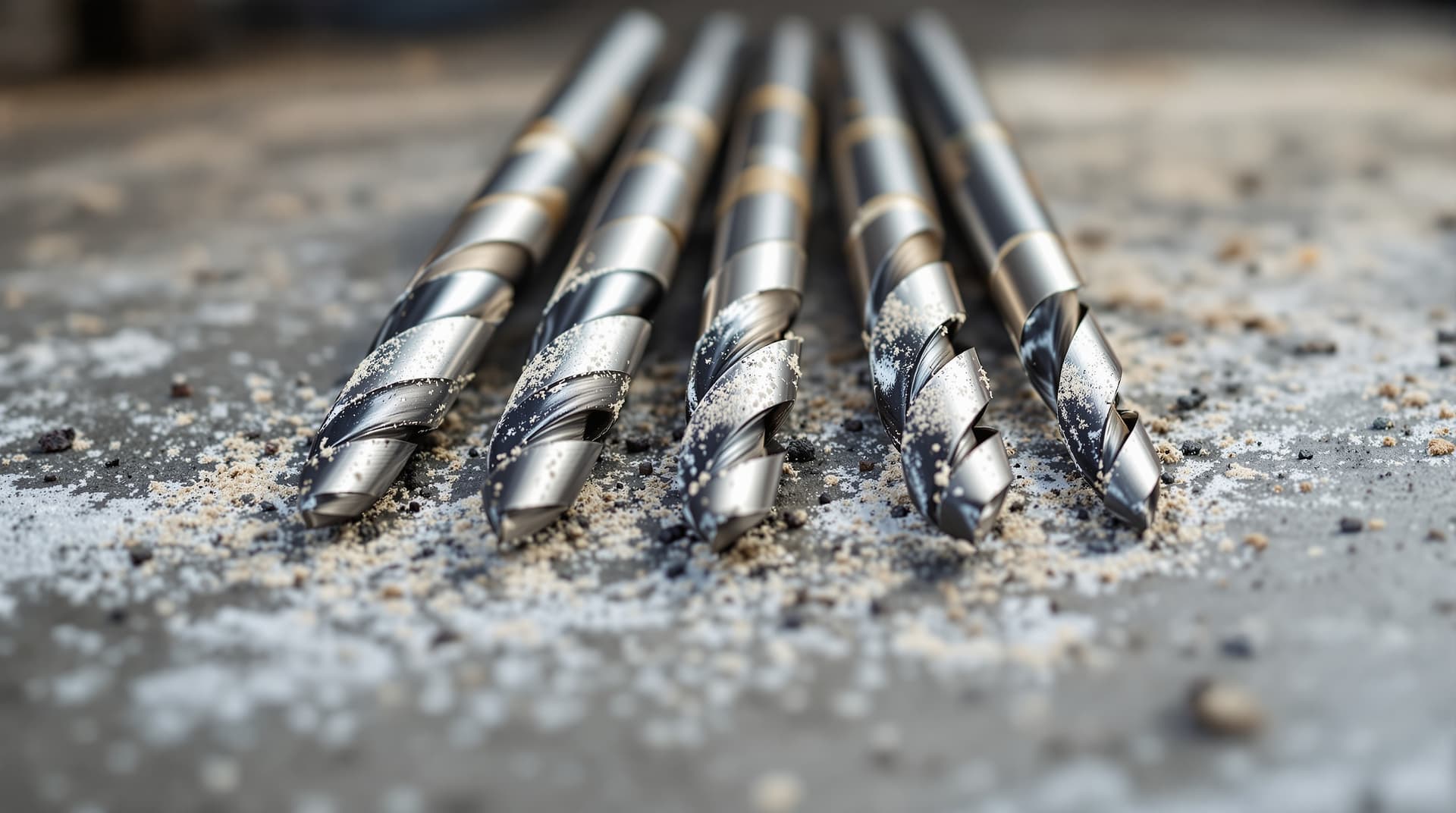
A masonry bit doesn't cut the way a wood or metal bit does. Instead of slicing ribbons of material away, it functions like a tiny chisel — pulverizing the substrate on impact while the flutes auger the resulting dust out of the hole. Three components determine how well it does this:
- The carbide tip. Tungsten carbide is exceptionally resistant to heat and abrasion. On impact, the tip fractures the masonry into dust rather than dulling against it.
- The brazing. The carbide tip is bonded to the steel shank under high heat, often with copper or silver alloy. Premium bits use diffusion bonding or solid-carbide heads, which won't shear off when the tip strikes rebar — a common failure point on cheap bits.
- Flute geometry. The spiral grooves behind the tip exist purely to evacuate dust. U-flutes handle standard debris removal; deeper or variable flutes are used on bits designed for deep holes, where packed dust is the main cause of overheating and binding.
Match the Bit to the Substrate
Not all masonry is equally hard, and your bit (and tool) should reflect that.
- Brick and mortar. A standard red brick may have a compressive strength as low as 2,000 PSI, and mortar joints are softer still. A 2-cutter straight or hex-shank carbide bit in a standard hammer drill is plenty. Heavy hammer impact isn't required and can actually shatter hollow cinder block or fragile vintage brick.
- Poured concrete and stone. Cured structural concrete can exceed 6,000 PSI, especially with hard aggregate like granite or quartz. This calls for an SDS-Plus or SDS-Max bit in a true rotary hammer — the reciprocating hammer action is what actually fractures dense aggregate, not the bit's sharpness.
- Reinforced concrete. If there's any chance of hitting rebar, a standard 2-cutter bit will catch and potentially snap. You need a dedicated 4-cutter or solid-carbide rebar-rated bit.
One practical decision worth making upfront: should you drill into the brick itself or the mortar joint? Mortar is softer and easier to patch if you change your mind later — fine for light loads like cameras or signage. But mortar lacks brick's structural integrity, so for heavy loads (shelving, TVs, ledger boards) drill into the center of the brick itself.
Shank Types: Straight, Hex, SDS-Plus, SDS-Max
Matching the bit's shank to your tool's chuck is the first decision — get this wrong and the bit will slip, bind, or simply not fit.
- Straight / hex shank — for standard 3-jaw chucks (and hex shanks also fit impact drivers). Suitable for holes up to about 3/8" in brick, mortar, and light block. Smooth straight shanks can slip under heavy torque; hex shanks grip better.
- SDS-Plus — the standard for serious concrete work. The slotted shank lets the bit slide independently of the chuck, transferring the hammer's full impact energy straight into the carbide tip. Covers roughly 5/32" to 1-1/8" diameter holes.
- SDS-Max — for heavy-duty rotary hammers and holes from about 1/2" up to 2" or core-drilling sizes. Substantially thicker shank for maximum energy transfer.
2-Cutter vs. 4-Cutter Heads
This is the single biggest factor in bit longevity if there's any chance of hitting steel.
- 2-cutter bits have a single carbide insert. They drill fast in clean, unreinforced concrete or brick and clear dust efficiently. But if the edge catches a piece of rebar, it can violently lock up — snapping the tip or twisting the drill (and your wrist) hard.
- 4-cutter (quad-head) bits use a cross-pattern carbide tip. They drill marginally slower in clean material but cut through rebar instead of binding on it, and produce rounder, more accurately-sized holes — which matters for anchors with tight tolerances like wedge and drop-in anchors.
If you're stocking a toolbox for anchor installation work, 4-cutter SDS-Plus bits in the common anchor sizes are the most versatile single investment you can make.
Already know your anchor — just need the pilot hole size?
The free Anchor Specification Engine calculates the exact drill bit diameter, embedment depth, and torque spec for your anchor and substrate per ACI 318-19 — no lookup tables required.
Try the Anchor Specification Engine →Drilling Technique: Where Most Bit Failures Actually Happen
Even the best bit performs poorly with bad technique. Follow these rules:
- Let the hammer mechanism do the work. Leaning your body weight into a rotary hammer doesn't drill faster — it stifles the piston, reduces impact energy, and overheats the bit. Apply firm, steady pressure and let the BPM (blows per minute) fracture the material.
- Control your RPM in brick. Soft brick and mortar drill best at 400–600 RPM. Running at full speed generates excess heat that can melt the brazing holding the carbide tip on.
- Peck-drill to clear dust. For holes deeper than about 2", pull the spinning bit partially out of the hole every few seconds to clear the flutes. Packed dust is the #1 cause of overheating, binding, and snapped bits.
- Score before you hammer on brittle surfaces. On hollow brick, glazed tile, or decorative masonry, start in rotary-only mode (no hammer) to establish a clean pilot divot, then switch on hammer mode. This prevents surface spalling and blowout.
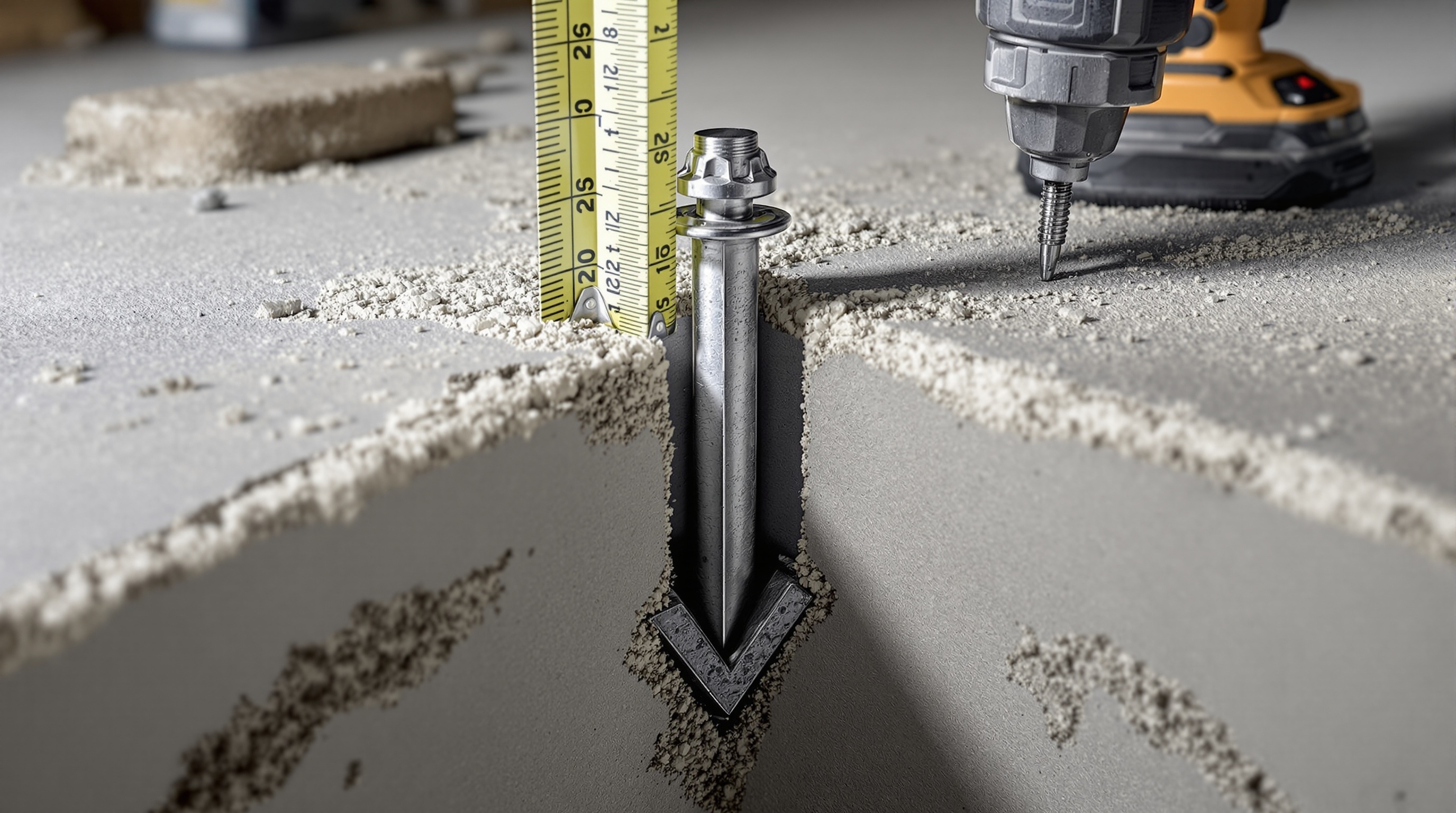
- Mark your depth. Wrap painter's tape or colored electrical tape around the bit at your target depth, or use your rotary hammer's depth rod. Always drill 1/4"–1/2" deeper than the anchor's embedment so settled dust doesn't stop the anchor from seating flush.
- Blow out every hole. Compressed air, a blowout bulb, or a shop vac with a narrow nozzle — dust left in the hole acts as a dry lubricant and significantly reduces anchor holding power.
Common Mistakes That Destroy Bits (and Holes)
Drilling concrete in rotary-only mode. Without the hammering action, the carbide tip simply spins against the aggregate, generating heat fast enough to glow red and melt the brazing — a $30 bit can be ruined on the very first hole.
Using water on carbide SDS bits. Diamond core bits need water cooling — standard carbide-tipped hammer bits don't. Water turns concrete dust into an abrasive paste that packs the flutes and can thermal-shock a hot carbide tip into micro-fracturing. (The exception: for slow rotary drilling in soft brick, occasionally dipping the tip in water can help manage heat — but never do this with an SDS bit running in hammer mode.)
Pushing through a rebar strike with a 2-cutter bit. If you suddenly hit hard resistance and see metal shavings in the flutes, stop immediately. Switch to a 4-cutter or dedicated rebar bit, or relocate the hole.
Wallowing the hole. Angling or aggressively spinning the bit on withdrawal turns a straight hole into a cone — an anchor in a wallowed hole wobbles and fails under load.
Ignoring wear. A 1/2" bit that's drilled 100 holes in reinforced concrete may now be cutting 15/32" — undersized enough to bend a wedge anchor trying to seat. Bits with wear-mark indicators (Hilti TE-CX, Milwaukee MX4) make this easy to check.
Buying Advice: What to Get for Each Job
- Light brick, block, and mortar (straight/hex shank): Bosch BlueGranite or Bosch Daredevil, DeWalt ROCK CARBIDE. All offer good carbide grades for standard hammer drills and impact drivers.
- General SDS-Plus concrete drilling: Bosch Bulldog / Bulldog Xtreme — solid-carbide heads with U-flute designs that hold up well in 4,000+ PSI concrete.
- 4-cutter / anchor-precision work: Milwaukee MX4 — aggressive 4-cutter geometry, wear-mark indicators, and excellent dust clearing for accurately-sized anchor holes.
- Reinforced concrete / frequent rebar: Diablo Rebar Demon — full solid-carbide heads with diffusion bonding designed specifically to cut through embedded steel rather than snag on it.
- Heavy commercial / industrial: Hilti TE-CX — premium gradient carbide and clear wear indicators, at a premium price.
- Tapcons and concrete screws: Stick to the manufacturer's matched bits (or verify size carefully) — these have the tightest tolerances of any masonry fastener. See our Tapcon sizing guide for the exact pilot hole for every diameter.
Across all categories: skip unbranded multi-packs. Look for ANSI B212.15 certification, which guarantees a "1/2-inch" bit actually drills a 1/2-inch hole — critical for anchors with tight tolerances.
Quick Reference: Bit Selection by Job
| Substrate / Job | Shank | Head Type |
|---|---|---|
| Brick / mortar, holes ≤3/8" | Straight / hex | 2-cutter |
| Poured concrete, 5/32"–1-1/8" | SDS-Plus | 2-cutter or 4-cutter |
| Anchor installation (precision) | SDS-Plus | 4-cutter |
| Reinforced concrete / rebar likely | SDS-Plus / SDS-Max | 4-cutter / solid carbide |
| Holes >1", core drilling | SDS-Max | 4-cutter / core bit |
Conclusion
A quality masonry bit is the bridge between your power tool and a secure installation. Match the shank to your chuck, choose 4-cutter heads whenever rebar is a possibility, run hammer mode in concrete (and skip it on brittle hollow brick), keep the flutes clear of dust, and never quench a hot carbide bit in water. Get those fundamentals right and a single quality bit will outlast a drawer full of cheap multi-packs — and once you know which anchor you're installing, the Anchor Specification Engine will tell you the exact bit size to reach for.