Hammer Drill vs Regular Drill: Which One Do You Need?
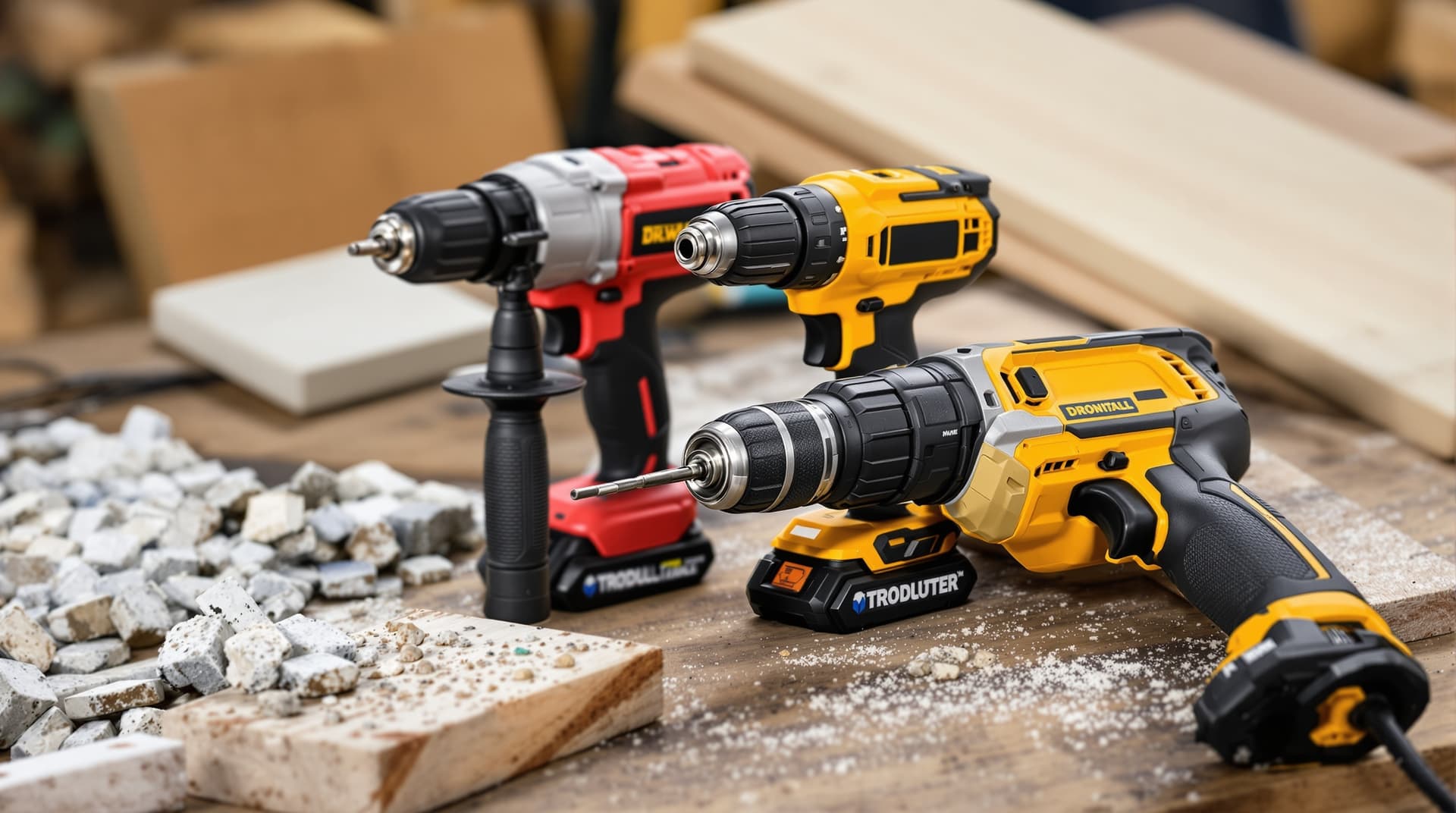
Excerpt: Hammer drill vs regular drill is a common decision for contractors and serious DIYers. They look similar, but the hammer drill adds a percussive action that changes what materials you can drill efficiently. This guide explains how each tool works, when to use one over the other, key differences, pro-level tips, common mistakes, and what to look for when buying.
What is a regular drill?
A regular drill (also called a standard drill or drill driver) rotates a bit to cut into material. It’s designed primarily for wood, metal, plastics, and light construction tasks. Regular drills provide variable speed, clutch settings for screw driving, and sometimes high torque modes. They use straight rotational force and depend on the bit geometry and cutting speed to remove material.
What is a hammer drill?
A hammer drill adds a rapid forward-and-back percussion to the rotational motion. The hammering action helps break up hard, brittle materials — most commonly masonry, brick, block, and light concrete. The mechanism either uses an internal cam-and-slider that creates impact or, in higher-end tools, a pneumatic action (in rotary hammers) that delivers stronger blows.
Hammer drill vs rotary hammer (important distinction)
- Hammer drill: Best for occasional drilling into brick, block, and small concrete anchors. Uses mechanical impacts while rotating.
- Rotary hammer: Uses a piston-driven pneumatic mechanism. Far more efficient for large-diameter holes in concrete and continuous heavy-duty work. Often uses SDS-plus or SDS-max bits.
When to use each tool
- Use a regular drill when: drilling and driving in wood, metal, plastics, or when installing screws and fasteners. For pilot holes, cabinet work, stud-fastening and light carpentry tasks, a drill driver is faster and cleaner.
- Use a hammer drill when: drilling into masonry, brick, or light concrete for anchor bolts, masonry screws, or conduit. For holes up to 1/2"–5/8" in concrete and intermittent work, a hammer drill is the practical choice.
- Use a rotary hammer when: drilling multiple holes in concrete, larger diameters (3/4" and up), or chiseling tasks. For pro-level concrete work, rotary hammers are faster and reduce operator fatigue.
Key differences and direct comparisons
- Action: Regular drill = rotation only. Hammer drill = rotation + percussive impacts.
- Materials: Regular drill = wood, metal, plastic. Hammer drill = masonry and light concrete (but can still drill wood/metal when hammer is off).
- Bits: Regular drill uses standard twist bits or spade bits; hammer drills use carbide-tipped masonry bits. Rotary hammers use SDS bits for better power transfer.
- Power delivery: Hammer drills are less efficient than rotary hammers for concrete. For heavy-duty work use a rotary hammer.
- Weight & control: Hammer drills are generally heavier than regular drills. Rotary hammers are heavier still and often include anti-vibration features and side handles for control.
Pro tips from contractors
- Start every masonry hole with the hammer off to create a pilot and reduce bit walking, then switch hammer on for full depth.
- Use a punch or center punch on tile or glazed surfaces before drilling to prevent bit walk and cracking.
- Match bit type to the job: carbide-tipped masonry bits for hammer drills; SDS-plus or SDS-max for rotary hammers. Don’t use wood or metal bits in hammer mode on masonry.
- Corded hammer drills generally give constant power for repetitive concrete drilling; high-capacity cordless (18V/20V, brushless) tools can match corded performance for moderate workloads. For extensive concrete work, prefer corded or high-voltage cordless with battery belt systems.
- When drilling metal, use cutting oil and appropriate speeds. Disable hammer mode (don’t use the percussion action on metal).
- For anchor holes in clean, reinforced concrete, periodically withdraw the bit to clear dust and prevent glazing of the carbide tip; use a vacuum or compressed air for dust control and OSHA compliance when needed.
Common mistakes to avoid
- Using hammer mode on wood or metal — this damages bits and workpieces.
- Using the wrong bit — masonry bits in wood give poor results and metal bits in masonry will blunt quickly.
- Applying excessive pressure — hammer drills rely on impact; pushing too hard can overheat the bit and wear the motor.
- Ignoring ergonomics — prolonged hammering without side handle and anti-vibration grip causes fatigue and loss of control.
- Not using dust extraction for concrete — silica dust is hazardous. Use a dust shroud or HEPA vacuum for frequent work.
Buying advice — what professionals should look for
- Power: For corded drills look for 7–10 amp motors for heavy drilling. For cordless, choose 18V/20V brushless platforms with high torque ratings; consider 36V/40V systems for sustained concrete work.
- Modes and controls: Variable speed trigger, adjustable clutch, clear hammer-on/off switch, and a torque selector are essential.
- Chuck type: Keyed chucks hold masonry bits better on heavy loads, but quick-change chucks are faster for driving. For rotary hammers, choose SDS-plus or SDS-max depending on bit size requirements.
- Build and ergonomics: Side handle, depth stop, and vibration reduction matter for accuracy and fatigue management.
- Battery and drivetrain: Prefer brushless motors for efficiency and longer runtime. Buy into a battery platform you’ll use across other tools.
- Warranty and service: Professional jobs need rapid service and long warranties. Check availability of replacement parts and bits in local markets.
- Dust management: If you’ll drill concrete indoors, prioritize tools with compatible vacuum attachments or buy a dust shroud.
Final decision guide
If your typical work is wood, metal, framing, or general screw driving, a regular drill/driver is the correct tool. If you occasionally need to drill into brick or block for anchors or conduit, choose a hammer drill with a solid motor and masonry bits. If you regularly drill multiple holes in concrete, or need large diameters and chiseling, invest in a rotary hammer (SDS-plus or SDS-max). Buy the tool that matches your workload rather than the occasional task.
Choosing correctly reduces downtime, bit costs, and operator fatigue. For contractors, the right investment is often a quality drill driver for finishing and a separate rotary hammer for heavy masonry—two tools that together cover nearly every job on site.