Best Drill Bit for Wood (Clean Holes & Fast Drilling)
Precision Matters: Achieving Clean Holes and Fast Drilling in Wood
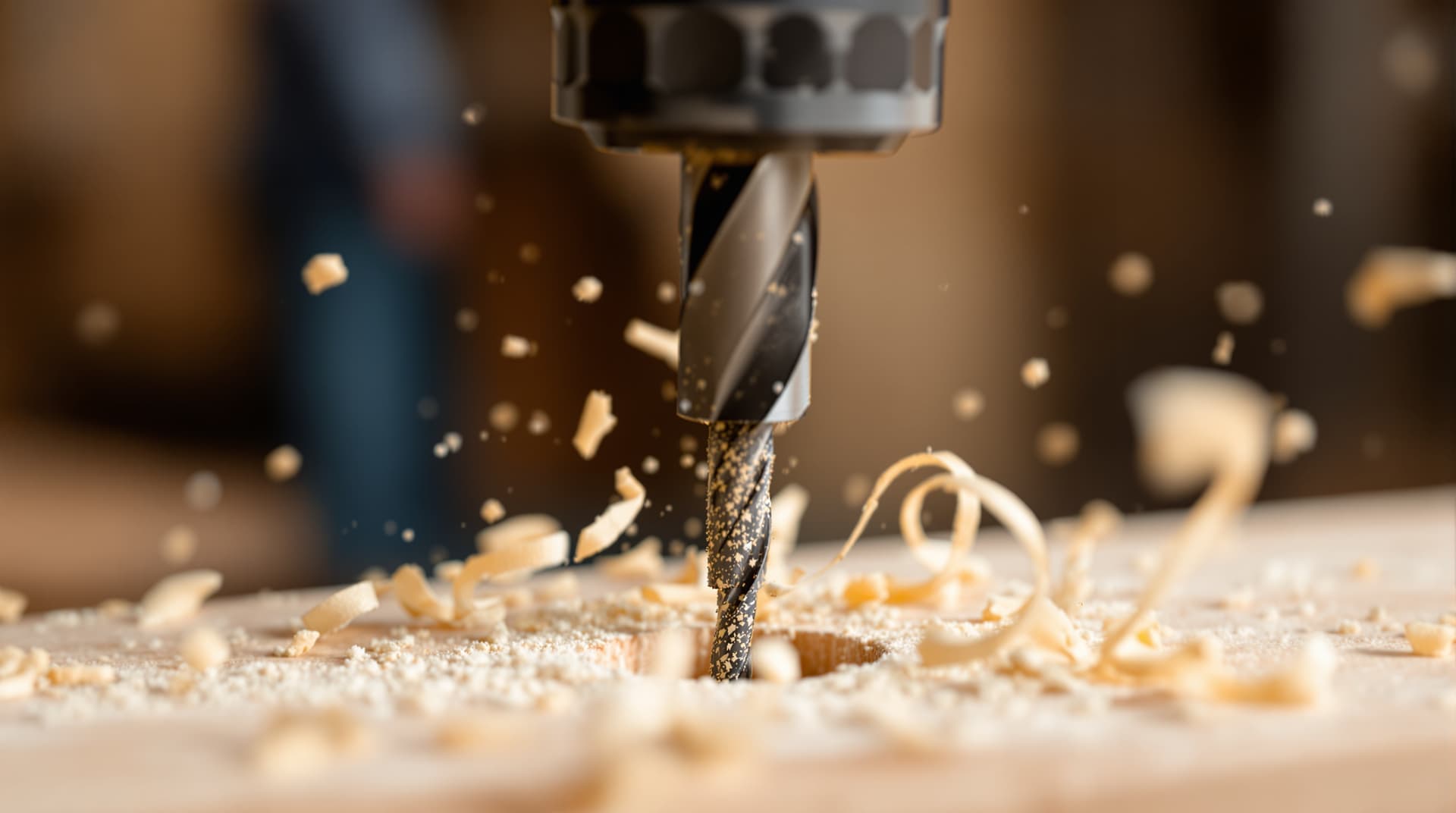
Most contractors and serious DIYers know that grabbing any random twist bit out of the toolbox will successfully punch a hole through a 2x4 stud. However, when it comes to cabinetry, furniture building, hanging doors, or exposed finish carpentry, simply "punching a hole" is unacceptable. You need absolute precision. The best drill bits for wood produce sharp entry edges, smooth sidewalls, and clean exits without splintering or tear-out.
Wood is a fibrous, unpredictable material. The grain density changes, knots present sudden obstacles, and laminated engineered woods like plywood are highly prone to surface veneer blowout. Choosing the correct bit geometry, matching it to the right drill speed (RPM), and applying proper technique separates amateur hour from professional craftsmanship.
What Makes a Wood Drill Bit Different? (An Overview)
Standard twist bits are designed primarily for metal. They feature a 118-degree or 135-degree point angle that forces its way through material. When used on wood, these bits tend to wander off the center mark before catching, and their flutes can tear the wood fibers rather than slicing them cleanly.
True wood drill bits are engineered specifically for the cellular structure of lumber. They incorporate sharp center spurs to lock the bit onto your layout mark, preventing skating. They also feature outer cutting lips (or scribers) that slice the perimeter of the hole before the main cutting edge hogs out the waste material inside. If your daily work involves jumping between metal, masonry, and framing lumber, understanding the specifics of drilling through various materials is essential for keeping your tools sharp and your work clean.
Types of Wood Drill Bits and When to Use Them
Not all wood bits serve the same purpose. A bit designed for tearing through floor joists will destroy a piece of maple plywood. Here are the professional standards:
Brad Point Bits
Brad point bits are the absolute standard for dowelry, cabinetry, and fine woodworking. They look like a standard twist bit but feature a sharp center pin (the brad) and raised outer spurs. The center pin provides pinpoint accuracy, while the spurs score the wood fibers to prevent surface tear-out.
- Best for: Dowel holes, pilot holes for screws, cabinetry, and general finish carpentry.
- Common Sizes: 1/8-inch to 1/2-inch.
- RPM Guideline: 1,500 to 2,000 RPM for softwoods; 1,000 to 1,500 RPM for hardwoods.
Forstner Bits
When you need a perfectly flat-bottomed hole, a Forstner bit is the only tool for the job. Instead of a spiraled flute, they utilize a wide, cylindrical cutting rim with radial blades. They excel at drilling overlapping holes, angled holes, and pocket holes.
- Best for: European cup hinges (typically 35mm), counterboring for hardware, and recessing magnets.
- Common Sizes: 1/4-inch to 2-1/2 inches (and metric equivalents).
- RPM Guideline: These require low speeds to prevent overheating. Run large Forstner bits at 500 to 700 RPM in a drill press for best results.
Spade Bits (Paddle Bits)
Spade bits are flat, blade-like bits built for speed, not beauty. They remove large amounts of material rapidly but leave rough sidewalls and aggressive blowout on the exit side. Modern variations, like the Bosch Daredevil series, feature a threaded conical tip that literally pulls the bit through the wood, reducing operator fatigue.
- Best for: Rough-in plumbing and electrical, drilling through studs and top plates.
- Common Sizes: 1/4-inch to 1-1/2 inches.
- RPM Guideline: 1,500 to 2,000 RPM. Let the threaded tip do the pulling.
Auger Bits
Auger bits feature a single, deep spiral flute with a threaded screw tip. They are unparalleled for drilling deep, straight holes through thick timbers. The deep flutes eject chips efficiently, preventing the bit from binding deep inside a beam.
- Best for: Timber framing, running Romex wire through multiple studs, and landscaping ties.
- Common Sizes: 3/8-inch to 1-1/4 inches; lengths often reach 18 inches.
- RPM Guideline: 400 to 800 RPM. A high-torque, low-speed drill (like a right-angle drill) is required.
Key Differences & Material Comparisons
When selecting your bits, the steel alloy and coating matter just as much as the shape. Most wood bits are made of High-Speed Steel (HSS). Unlike drilling through steel or cast iron, where tradespeople often debate titanium versus cobalt drill bits, cobalt is unnecessarily brittle and expensive for wood. Standard HSS holds a remarkably sharp edge, which is exactly what wood fibers require.
Titanium Nitride (TiN) coated bits (identifiable by their gold color) reduce friction and dissipate heat, extending the life of the edge up to six times longer than standard HSS. However, once a titanium-coated brad point bit gets dull, you cannot sharpen it without grinding off the coating.
For highly abrasive engineered woods—like MDF, melamine, or Baltic birch—carbide-tipped bits are the top-tier choice. They maintain their edge incredibly well against the abrasive glues used in sheet goods. If you are stepping up from hand drills to automated production and machining plywood or hardwoods, solid carbide routing bits replace traditional drill bits entirely.
Pro Tips for Clean Holes
Achieving a flawless hole in a high-dollar piece of white oak requires more than just buying a premium bit. Implement these contractor-tested techniques:
- Use a Spoil Board: The most common cause of exit blowout is a lack of backing pressure. Always clamp a scrap piece of wood (a spoil board) tightly against the back of your workpiece. When the bit exits your good piece, it will bite directly into the scrap, leaving a razor-clean exit hole.
- The Painter's Tape Trick: To minimize surface splintering on entry (especially on delicate veneers), place a strip of blue painter's tape over the drill location before marking your center. The tape holds the fragile surface fibers together while the bit scores them.
- Peck Drilling: For holes deeper than two inches, do not drill in a single plunge. Plunge an inch, pull the bit out while it's still spinning to clear the chips, and plunge again. Packed chips create extreme friction, which is a leading reason to prevent drill bits from burning or breaking on the job site.
Common Mistakes to Avoid
Even seasoned builders make errors when rushing. Avoid these standard pitfalls:
Applying Too Much Pressure: Let the tool do the work. If you have to lean your body weight into a brad point or Forstner bit, the bit is dull. Forcing a dull bit crushes wood fibers instead of cutting them, resulting in torn edges and scorched wood.
Running Forstner Bits Too Fast: High speed creates friction, and friction creates heat. A large Forstner bit running at 2,000 RPM will rapidly turn blue, lose its temper (hardness), and burn the wood. Always drop your drill speed for large diameter bits.
Using Auger Bits in Finish Work: The aggressive screw tip on an auger or modern spade bit will forcefully pull the bit into the wood. If used on a thin piece of cabinet grade plywood, it can aggressively yank the drill out of your hand and shatter the workpiece.
Buying Advice: What to Keep in Your Tool Belt
You don't need to buy a massive, 100-piece drill bit set where half the sizes will never see the light of day. Instead, build a targeted collection of high-quality bits.
For everyday finish carpentry and DIY projects, invest in a premium 7-piece brad point set (sizes 1/8" to 1/2") from reputable manufacturers like Fisch, W.L. Fuller, or Bosch. Austrian-made Fisch bits are widely considered the gold standard for perfectly machined spurs.
For rough-in framing and electrical, a standard 6-piece set of Irwin Speedbor or DeWalt spade bits is highly cost-effective and easy to replace when they inevitably hit a hidden nail. If you frequently install European cabinet hinges or recessed lighting, purchase individual, high-quality carbide-tipped Forstner bits only in the exact sizes you require (like 35mm), rather than buying cheap, massive sets that dull quickly.
Conclusion
Selecting the best drill bit for wood dictates the final quality of your project. If you are running wires through studs, grab a spade or auger bit and let the tool do the heavy lifting. If you are building custom shelving, a premium HSS brad point bit will ensure your fasteners seat perfectly without marring the surface finish. Understand the material, respect the required RPMs, keep your cutting edges sharp, and you will achieve flawless, professional-grade results on every plunge.