Cordless vs Corded Hammer Drill for Concrete: Which Is Better?
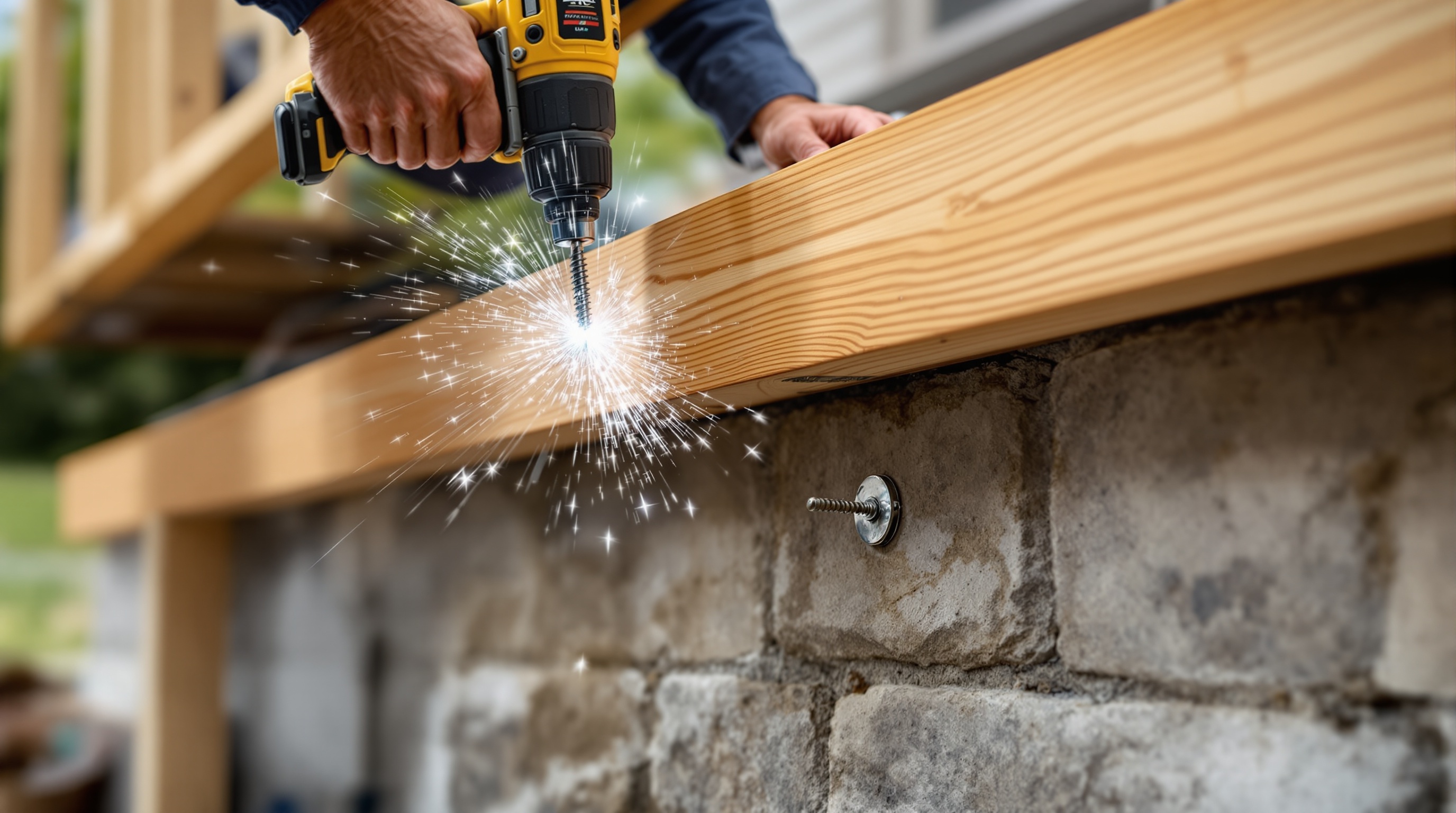
Drilling into concrete demands more than just rotational force; it requires percussive impact to break apart the aggregate and cement. Whether you are a general contractor setting wedge anchors on a commercial slab or a serious DIYer installing a ledger board for a new deck, choosing the right tool is critical to your efficiency and the quality of the hole. For years, corded power was the undisputed king of the job site. Today, high-capacity lithium-ion batteries and advanced brushless motors have fundamentally shifted the landscape.
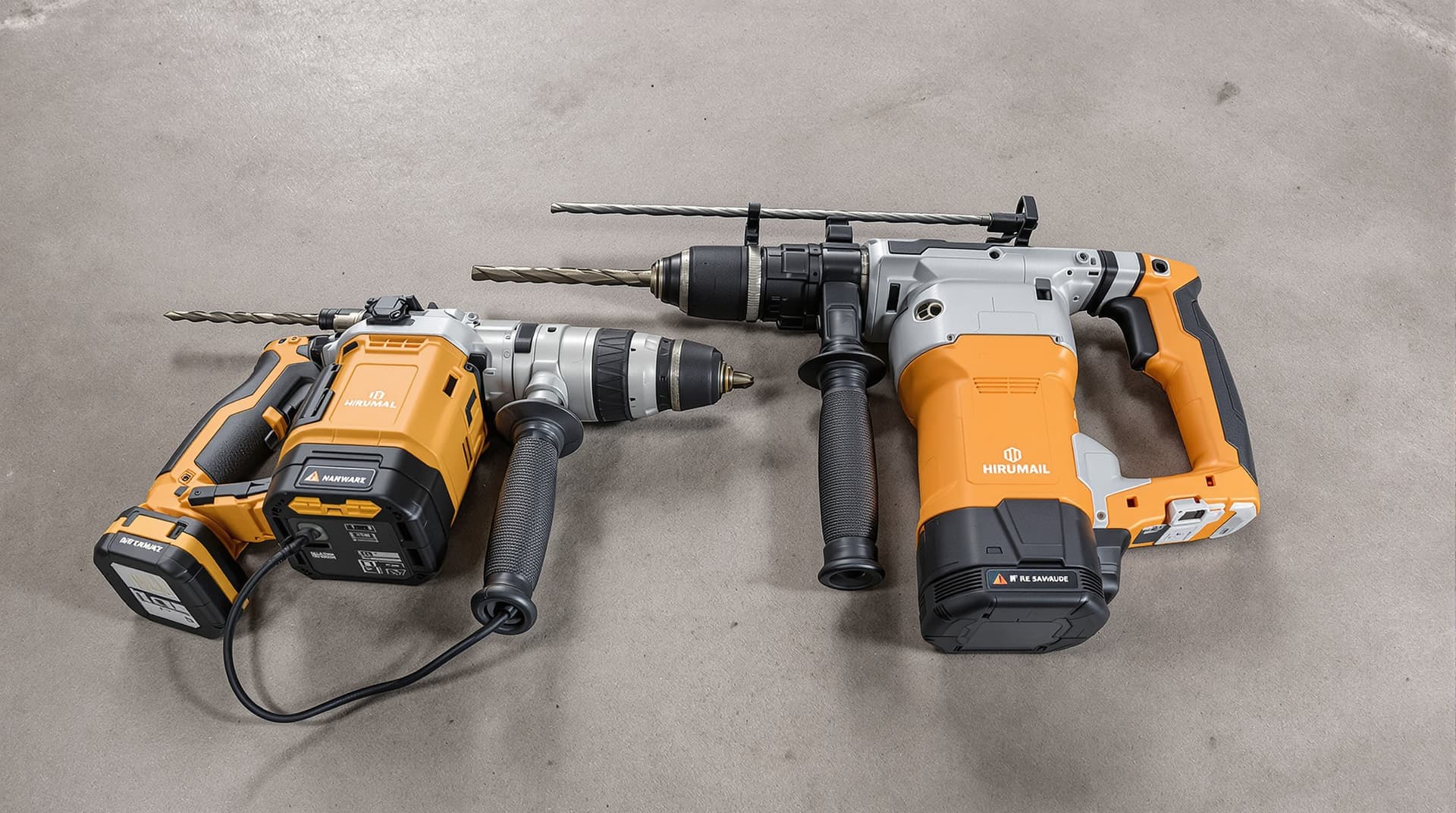
Deciding between a cordless and corded hammer drill comes down to a careful calculation of your job site environment, the diameter of the holes you are drilling, and the volume of work you need to complete. This guide breaks down the true capabilities of both platforms to help you choose the right tool for your next concrete project.
Overview: How Hammer Drills Conquer Concrete
Before comparing power sources, it is important to understand how these tools operate. Standard hammer drills utilize a mechanical cam-action mechanism. As the chuck rotates, two ribbed metal discs slide past one another, creating a high-frequency vibrating impact. This translates to Blows Per Minute (BPM)—usually between 30,000 and 40,000 BPM in high-end models. While highly effective for smaller fasteners, it is a distinctly different mechanism than an SDS rotary hammer, which uses an electro-pneumatic piston to deliver slower but vastly more powerful impacts measured in Joules.
If you are still deciding between basic tool types before looking at power sources, you should understand how a standard drill compared to a hammer drill dictates your ability to penetrate masonry at all. Assuming you know you need percussive action, the next step is determining whether a battery or a plug is your best bet.
When to Use a Corded Hammer Drill
Corded hammer drills represent sustained, brute force. Running on 120V AC power, these tools typically feature motors ranging from 7.0 to 10.0 Amps. They are built for continuous, high-volume production where tool fatigue and battery limitations are unacceptable.
You should opt for a corded hammer drill when:
- Drilling High Volumes of Deep Holes: If you are drilling dozens of 1/2-inch or larger holes for structural anchors, a corded tool ensures you will not experience voltage drop or thermal throttling mid-task.
- Working in a Stationary Environment: When working at a bench, pre-fabricating materials, or doing extensive slab work where a generator or wall outlet is readily available, the cord is a non-issue.
- Prioritizing Tool Longevity: AC motors have fewer complex electronics than brushless DC motors, and without a battery to degrade over years of heat and freezing temperatures, a corded drill like a classic 8.5-Amp Bosch or Makita can easily last decades.
When to Use a Cordless Hammer Drill
The modern 18V and 20V MAX cordless hammer drills—exemplified by lines like the Milwaukee M18 FUEL, DeWalt 20V MAX XR, and Makita 18V LXT—are engineering marvels. By pairing brushless motors with high-output 5.0Ah or 8.0Ah batteries, these tools routinely push over 1,000 in-lbs of torque, rivaling or beating their corded counterparts in short bursts.
A cordless hammer drill is your best choice when:
- Mobility is Paramount: Navigating ladders, scaffolding, or confined crawlspaces with a heavy extension cord is dangerous and inefficient.
- Drilling Smaller Fasteners: If your primary concrete tasks involve 3/16-inch to 3/8-inch holes for Tapcons, sleeve anchors, or plastic wall plugs, a modern cordless hammer drill handles these effortlessly.
- Working on Remote Sites: Punch-list work, fence installations, or new construction without temporary power drops make battery platforms indispensable.
Head-to-Head Comparison: The Key Differences
Power and Performance
Historically, corded drills won on torque and sustained speed. In 2026, premium cordless hammer drills actually match or exceed the RPM and BPM of standard corded models. A top-tier 20V cordless hammer drill will deliver around 2,000 RPM and 32,000 BPM. However, corded models still hold a slight edge in heavy-load consistency. When pushing a 1/2-inch carbide masonry bit into old, fully cured 5,000 PSI concrete, a cordless drill's battery will heat up and the internal brain may throttle power to protect the cells. A 10-Amp corded drill will simply keep eating concrete.
Runtime vs. Continuous Operation
Runtime is the obvious dividing line. A corded drill runs forever. A cordless drill's runtime depends heavily on the battery's Amp-Hour (Ah) rating and the density of the concrete. Drilling a 1/4-inch hole 2 inches deep will barely register on a 5.0Ah battery, allowing you to drill upwards of 80 to 100 holes per charge. But if you step up to a 5/8-inch bit, that same battery might be dead in 15 minutes. High-output batteries (like DeWalt FlexVolt or Milwaukee High Output) mitigate this, but require constant rotation on the charger for all-day work.
Weight and Ergonomics
Surprisingly, corded drills are often lighter. Because they lack a dense lithium-ion battery pack, a robust 8-Amp corded hammer drill typically weighs around 4.5 to 5 pounds. A comparable premium cordless hammer drill weighs roughly 3.5 pounds as a bare tool, but snapping on a 5.0Ah battery pushes the total weight to over 5 pounds. If you are drilling overhead into a concrete ceiling to hang conduit, that extra battery weight creates rapid shoulder fatigue.
Pro Tips for Drilling Concrete
Regardless of whether your tool has a cord, how you operate it dictates your success. Expert contractors employ a few strict rules when tackling concrete.
- Clear the Dust Constantly: Concrete dust is abrasive and acts like a brake on your bit. Pull the bit out of the hole every half-inch of depth to clear the flutes. This prevents the bit from binding and significantly speeds up drilling.
- Let the Tool Do the Work: The cam-action of a hammer drill requires RPM to function. If you press too hard, you slow the motor down and decrease the BPM. Apply firm, steady pressure, but do not lean your entire body weight into the drill.
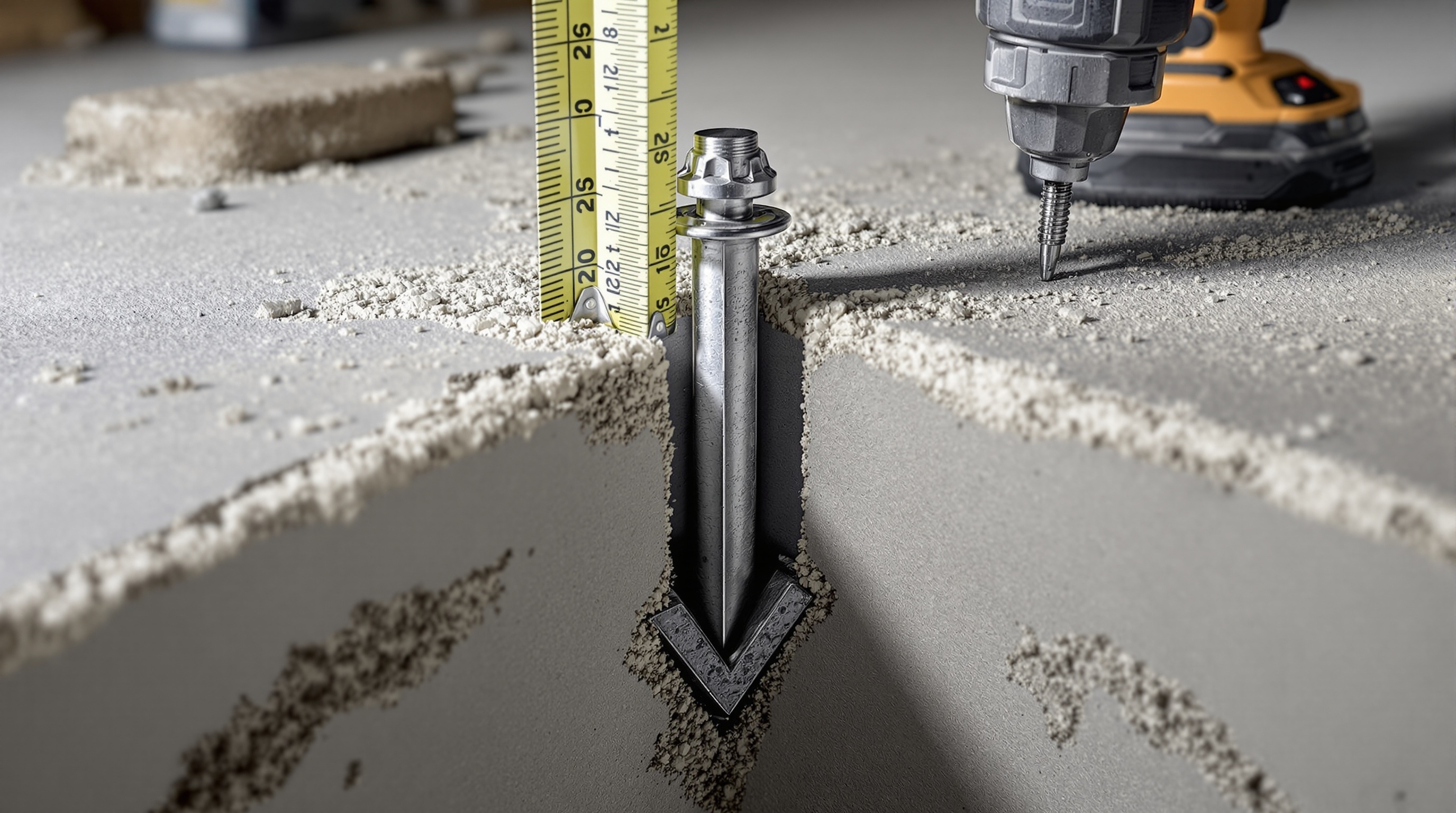
- Match the Bit to the Anchor: Precision is critical for anchor holding power. Refer to manufacturer specifications when sizing your drill bit for concrete anchors. A hole that is perfectly sized will ensure maximum wedge or thread engagement.
Common Mistakes to Avoid
Concrete drilling destroys tools and accessories faster than wood or metal if done incorrectly. The most common mistake is using the wrong bit. Standard twist bits will melt in seconds. Understanding the differences between masonry and concrete drill bits is vital. Always ensure you are using a high-quality carbide-tipped bit designed specifically for impact.
Another frequent error is running the drill at maximum speed before the hole is established. This causes the bit to walk across the concrete, ruining your layout. Start slow in standard drilling mode to create a dimple, then switch to hammer mode and increase the speed. Finally, do not ignore heat. If the tip of your bit turns blue or black, you have compromised the temper of the steel, leading to drill bits burning or breaking inside the hole.
Buying Advice: Which One is Right for You?
If you are a homeowner, DIYer, or a contractor doing punch-list tasks, the cordless hammer drill is the clear winner. The convenience of pulling a tool out of a bag and instantly drilling a hole for a Tapcon without running 100 feet of extension cord cannot be overstated. Stick to established 18V/20V platforms so you can share batteries across your impact drivers and saws. Look for models with a 1/2-inch metal ratcheting chuck for better bit retention.
If you are a concrete specialist, an electrician running commercial conduit, or a contractor tackling a full basement remodel, a corded hammer drill (or better yet, a corded SDS Plus rotary hammer) is the smarter investment. You will save money up front by not buying high-capacity batteries, and you will never have to stop working because a battery overheated on a tough aggregate.
Conclusion
The cordless vs corded hammer drill debate has evolved from a question of power to a question of application. Modern cordless hammer drills offer uncompromised torque and ultimate portability, making them the standard choice for daily multi-material use. However, for specialized, high-volume concrete drilling, the relentless, uninterrupted power of a corded machine remains a vital asset on the job site. Assess your daily workflow, match your drill to your most common fastener size, and invest in high-quality carbide bits to get the most out of whichever platform you choose.