Structural Screws vs Lag Bolts: Complete Guide
If you've ever stood in the fastener aisle staring at a box of lag bolts next to a box of "structural screws" that cost three times as much, you've run into one of the most common framing decisions in deck and outdoor construction: which fastener actually belongs in a ledger board, beam connection, or stair stringer?
Both are designed to join thick wood members — a deck ledger to a house band joist, a beam to a post, a stringer to a header — but they get there in very different ways, and the building codes treat them differently too. This guide breaks down how each fastener works, where the codes allow (or require) one over the other, and how to choose correctly for your project. If your ledger or beam connects to a concrete or masonry foundation wall instead of a wood band joist, you'll need a concrete anchor rather than either of these — see our guide to types of concrete fasteners and the Anchor Specification Engine for that case.
Lag Bolts (Lag Screws): The Traditional Choice
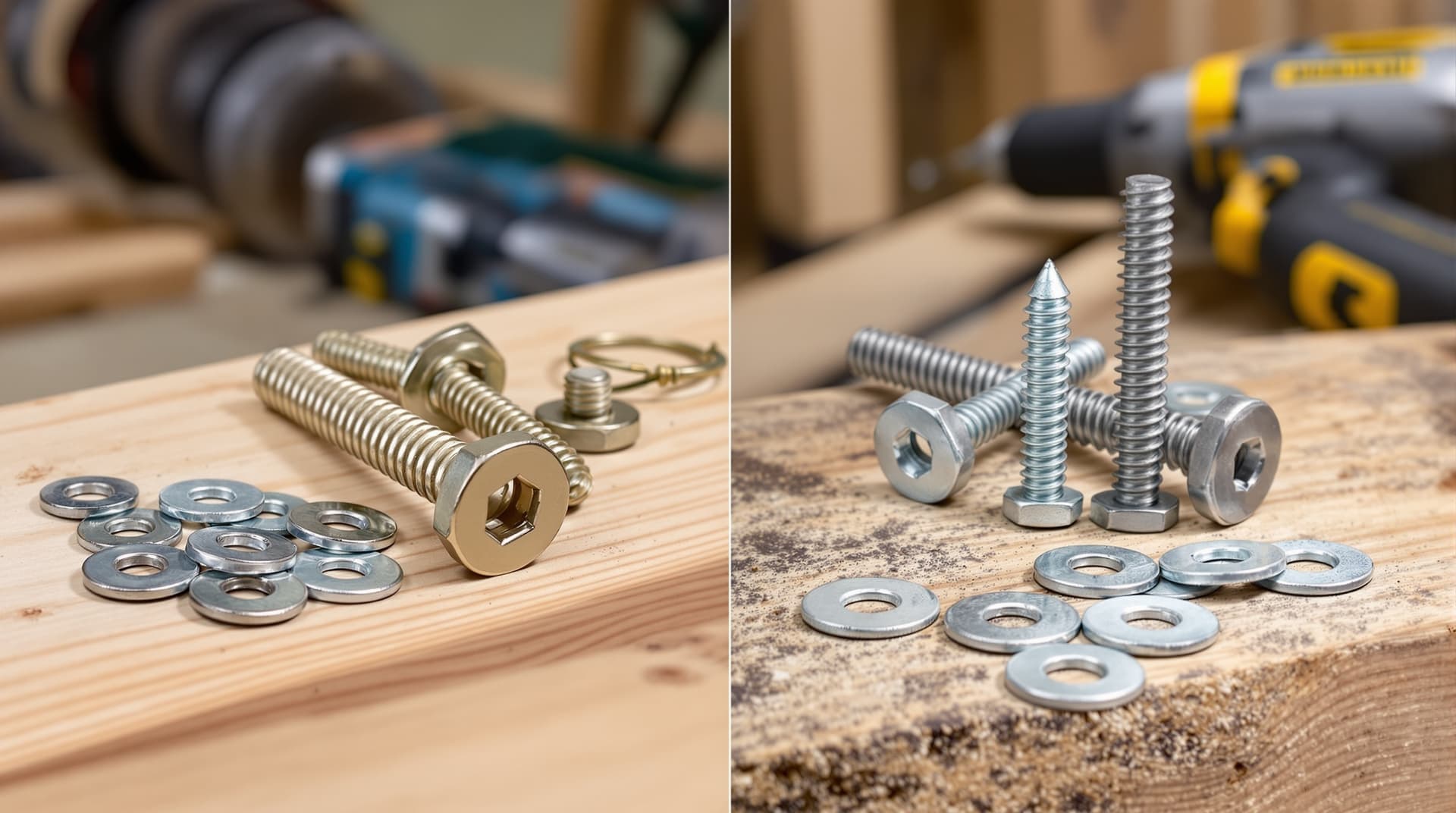
A lag bolt — more accurately called a lag screw, since it has no nut — is a heavy hex-head or square-head fastener with coarse threads on roughly two-thirds of its length and a smooth shank near the head. Common deck-construction sizes run 1/4" to 1/2" in diameter and 3" to 6" in length.
- Pre-drilling required. Lag screws need a pilot hole sized to roughly 60-75% of the screw's diameter through the threaded portion, plus a clearance hole matching the shank diameter through the first member. Skip this step in dense lumber and the screw will split the wood or snap during installation.
- Installation is done with a socket or wrench — slow going for more than a handful of fasteners, and torque control matters (overdriving strips the wood threads; underdriving leaves a loose connection).
- A washer is required under the head to spread bearing load across the wood fibers — without one, the hex head can pull into the wood under load.
Structural Screws: The Modern Alternative
"Structural screw" is the general term for engineered wood screws like the Simpson Strong-Drive SDWS Timber screw, FastenMaster LedgerLOK and TimberLOK, and GRK RSS (Rugged Structural Screw). These are smaller in diameter (typically 0.220"-0.276") but use an aggressive Type-17 cutting point and deep, sharp threads designed specifically for wood-to-wood connections.
- No pre-drilling in most cases. The cutting point bores its own path through standard framing lumber. Manufacturers sometimes recommend a small pilot hole in dense hardwoods or near board edges to prevent splitting — check the specific product's installation instructions.
- Driven with an impact driver or drill using a star/Torx bit — dramatically faster than socket-driving lag screws, especially for a ledger board with a fastener every 16 inches.
- No washer needed. The flat or trim head is engineered to seat flush without a separate bearing washer.
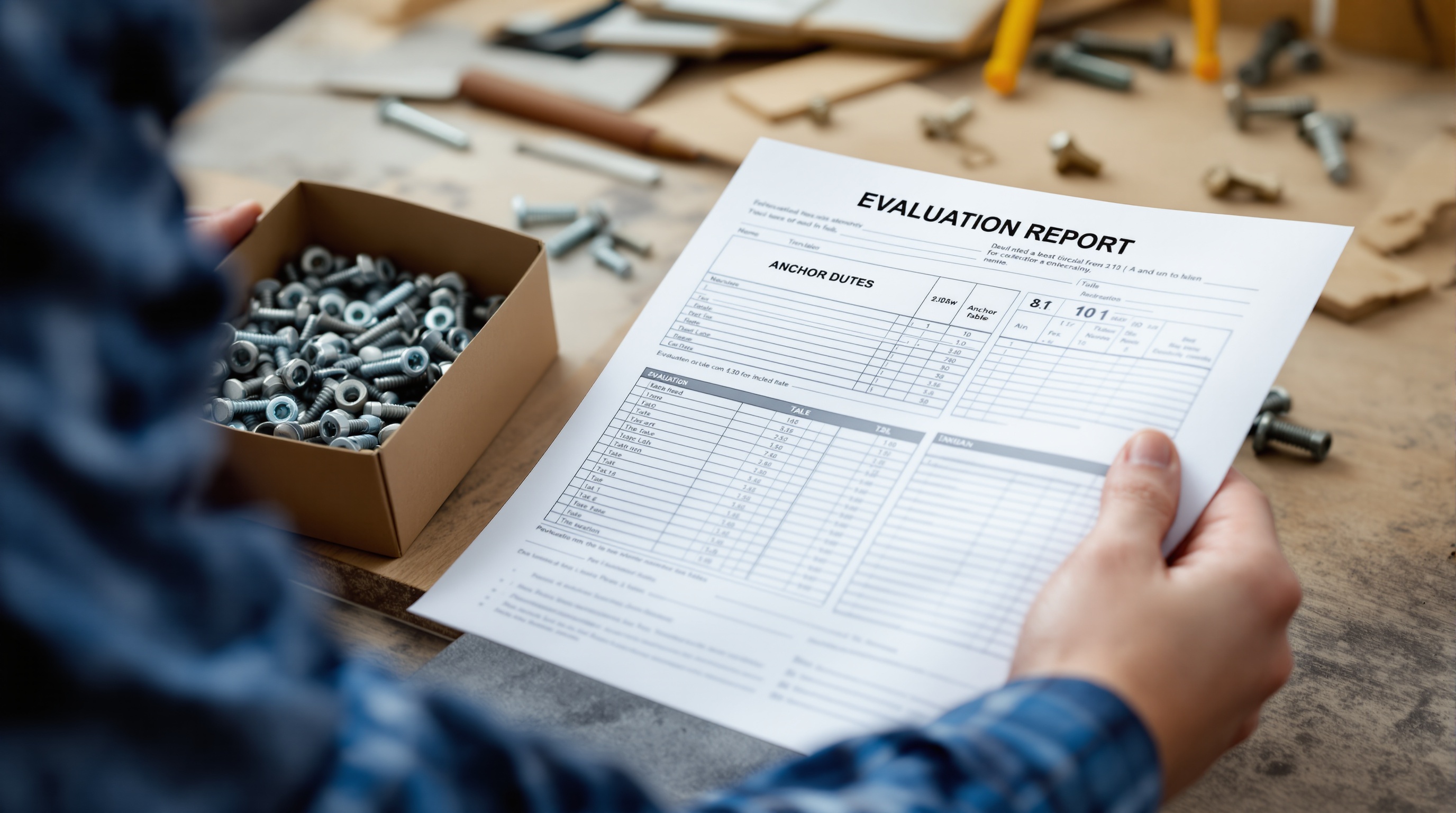
- Engineered load tables. Each product has its own ICC-ES Evaluation Service Report (ESR) with published withdrawal and shear values — these are often used directly by code officials in place of the generic lag-screw tables.
Side-by-Side Comparison
| Factor | Lag Bolts | Structural Screws |
|---|---|---|
| Pre-drilling | Required — pilot + clearance hole | Usually none |
| Install tool | Socket / wrench | Impact driver / drill (star bit) |
| Washer | Required | Not needed (integrated head) |
| Typical diameter | 1/4"–1/2" | 0.220"–0.276" |
| Load data source | Generic NDS / IRC tables | Product-specific ICC-ES ESR report |
| Installation speed | Slow | Fast |
| Cost per fastener | Lower | Higher (2-4x) |
Deck Ledger Attachment: What the Code Actually Allows
The deck ledger — the board lag-bolted or screwed to the house's band joist that carries one entire side of the deck — is the single most safety-critical connection in residential deck construction, and it's where this comparison matters most. For the full picture — including flashing, lateral load connectors, and what to do if your house has a concrete foundation or brick veneer — see our complete deck ledger attachment guide.
The IRC's prescriptive ledger fastening table (commonly referenced as Table R507.9.1.3 in recent code editions, numbering varies by year) gives spacing requirements specifically for 1/2" lag screws or through-bolts based on joist span and ledger/band-joist thickness — for example, a 12-foot joist span typically requires fasteners spaced roughly every 16 inches in two staggered rows.
Structural screws like the Simpson SDWS Timber or FastenMaster LedgerLOK are evaluated separately under their own ESR reports, which often allow them as a direct substitute for 1/2" lag screws at the same spacing — sometimes with a different fastener length requirement to achieve adequate penetration into the band joist. The key point: you can't mix-and-match tables. If you're using a structural screw product, follow that product's ESR-published spacing table, not the generic IRC lag screw table — and keep a copy of the ESR on hand for inspection.
Either way, the ledger must be bolted/screwed directly to solid framing (the band joist), never through siding alone, and flashing must be installed to prevent water intrusion behind the ledger — fastener choice doesn't change these requirements.
Other Common Applications
- Beam-to-post connections — both fastener types are used here, often in combination with structural hardware (post caps, brackets). Structural screws are popular for retrofitting hardware to existing posts without splitting them.
- Stair stringers to headers — structural screws' speed of installation is a major advantage when attaching multiple stringers.
- Built-up beams — fastening multiple 2x members together to form a beam; lag screws have long been standard here, though structural screws are increasingly specified for their ease of installation in tight crawlspaces.
Note that none of these fasteners are a substitute for a joist hanger at flush-framed joist connections — see our guide on joist hangers vs. toe-nailing for when a hanger is required and which fasteners go in it.
Which Should You Use?
For most DIY deck builds, structural screws are the more forgiving choice: no pre-drilling, no washers to lose, and a single tool handles installation. Their main downside is cost and the fact that you must follow the specific product's ESR table — don't assume one brand's spec applies to a different brand's screw.
Lag bolts remain fully code-compliant, cost less per fastener, and are the fastener most local inspectors are most familiar with from the generic IRC tables. If you already own the sockets and don't mind the slower install, they're a proven option. (Note: despite the similar name, these wood-to-wood lag screws are unrelated to concrete "Tapcon" screws — see our Tapcon sizing guide if you're fastening into concrete or masonry instead of framing lumber.)
Coatings and Corrosion Resistance
Outdoor fasteners spend their service life in direct contact with pressure-treated lumber, which contains copper-based preservatives that accelerate corrosion of standard zinc-plated steel. Both lag bolts and structural screws are available in coatings rated for this exposure, but the rating matters more than the fastener type:
- Hot-dip galvanized (HDG) — the traditional standard for lag bolts in treated lumber. Thick, durable zinc coating.
- Proprietary ceramic/polymer coatings — most structural screw manufacturers use their own coating systems (e.g., Simpson's Quik Guard, FastenMaster's coatings) rated for direct contact with ACQ and other modern treated-wood chemicals. These are typically tested and rated specifically for the manufacturer's own products.
- Stainless steel — required near saltwater, pools, or in coastal climates regardless of which fastener type you choose.
Whichever fastener you choose, confirm the coating is explicitly rated for contact with the specific treated lumber you're using — "exterior rated" alone isn't the same as "rated for ACQ contact."
Common Installation Mistakes
- Skipping the pilot hole on lag bolts near board ends — even with a correctly sized pilot through the body of the board, the last inch near an end grain is prone to splitting. Pre-drill the full length when working within 3" of an end.
- Driving structural screws at an angle — the self-tapping point can wander off-axis in soft lumber if not started perfectly square. A slight pilot dimple with an awl or drill bit tip helps keep the screw tracking straight.
- Forgetting the washer on lag bolts — without one, the hex head will dig into the wood over time under sustained load, effectively shortening the engaged thread length.
- Mixing fastener brands within one ESR-governed spacing pattern — if an inspector asks for documentation, "I used the spacing from a different brand's screw" is not a passing answer.
Planning a deck, beam, or stair build?
The Project Tool Finder walks through your specific project — deck size, joist span, framing material — and recommends the right fasteners, tools, and a complete materials list tailored to what you're building.
Frequently Asked Questions
Can I substitute structural screws for lag bolts at the exact same spacing?
Often yes, but only if the structural screw's ESR report explicitly lists that spacing as equivalent. Always check the specific product's ESR — don't assume.
Do structural screws need a pilot hole in pressure-treated lumber?
Usually not for standard framing dimensions, but many manufacturers recommend a small pilot hole within a few inches of board ends or in dense species like Douglas fir to prevent splitting. Check the product packaging.
Are structural screws strong enough for a ledger on a multi-story deck or large span?
Yes, when installed per their ESR table — but larger spans may require closer spacing or a different fastener length than a standard single-story deck. This is exactly the kind of calculation worth running through a tool or with a local code official before you start drilling.