Tapcon Screws vs Concrete Anchor Bolts: The 2026 Mastery Guide
Intro: Why the choice matters
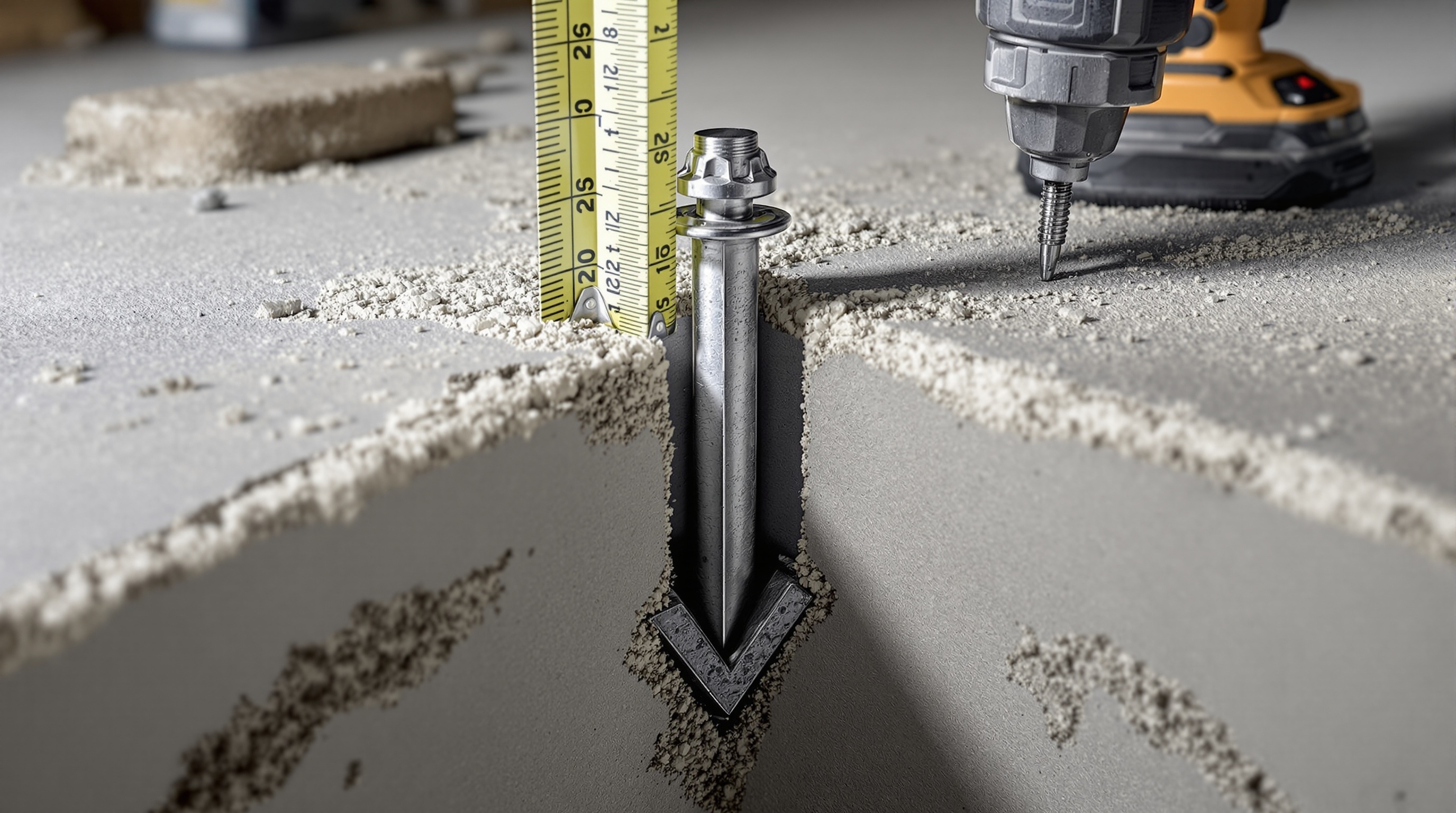
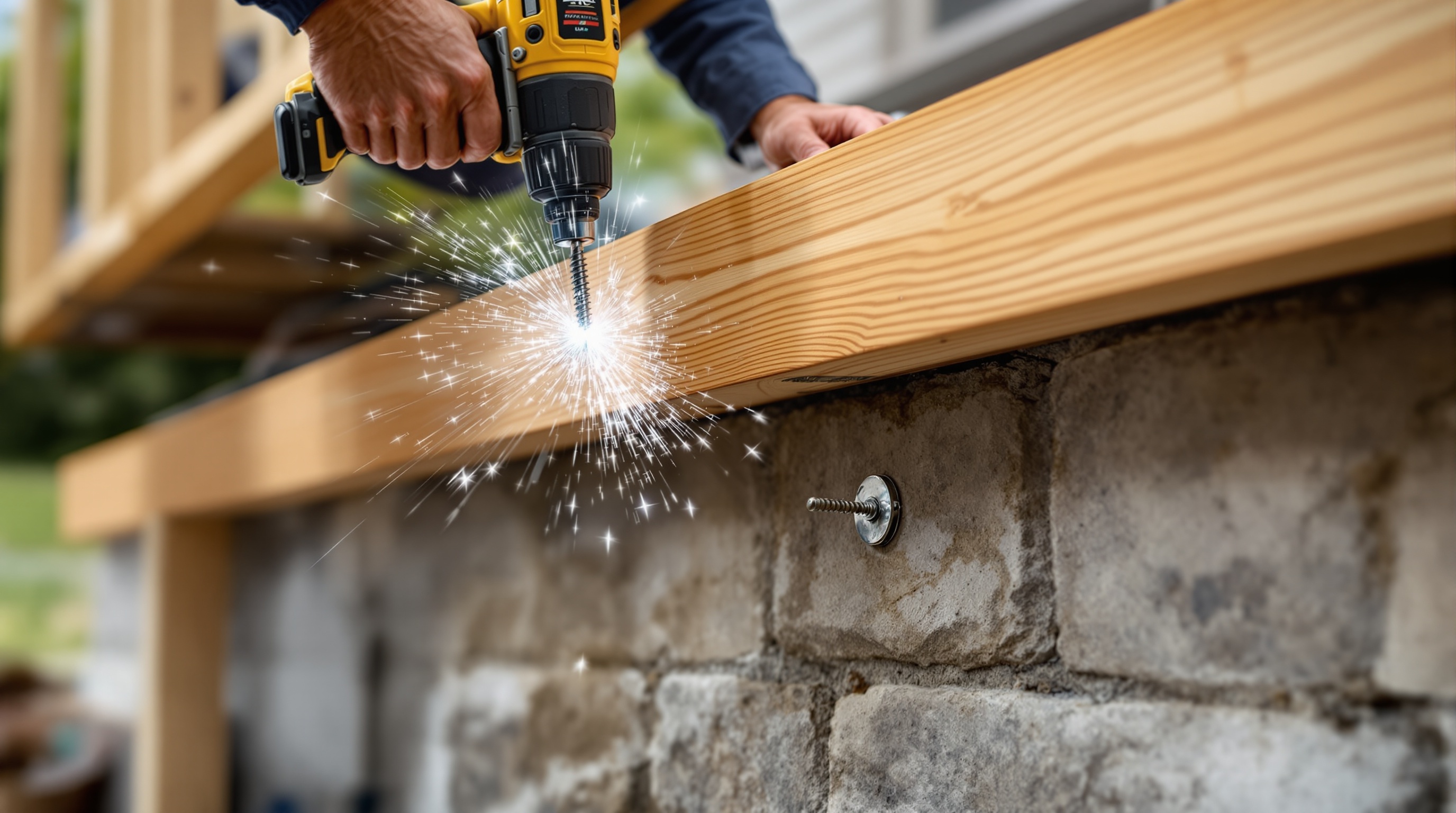
When fastening into concrete, brick, or CMU, the difference between using Tapcon screws vs concrete anchor bolts is not cosmetic — it's structural. The wrong fastener can lead to pull-out, shear failure, or catastrophic detachment of a mounted assembly. This guide gives contractor-grade guidance on when to use each system, how they perform under load, installation comparisons, common mistakes, and buying advice for durable, code-compliant installations.
Not sure which one your project needs?
The Anchor Specification Engine takes your load, substrate, and edge conditions and tells you whether a Tapcon, wedge anchor, sleeve anchor, or adhesive anchor is appropriate — plus the exact diameter, embedment, and spacing per ACI 318-19.
What they are
Tapcon screws (concrete screws)
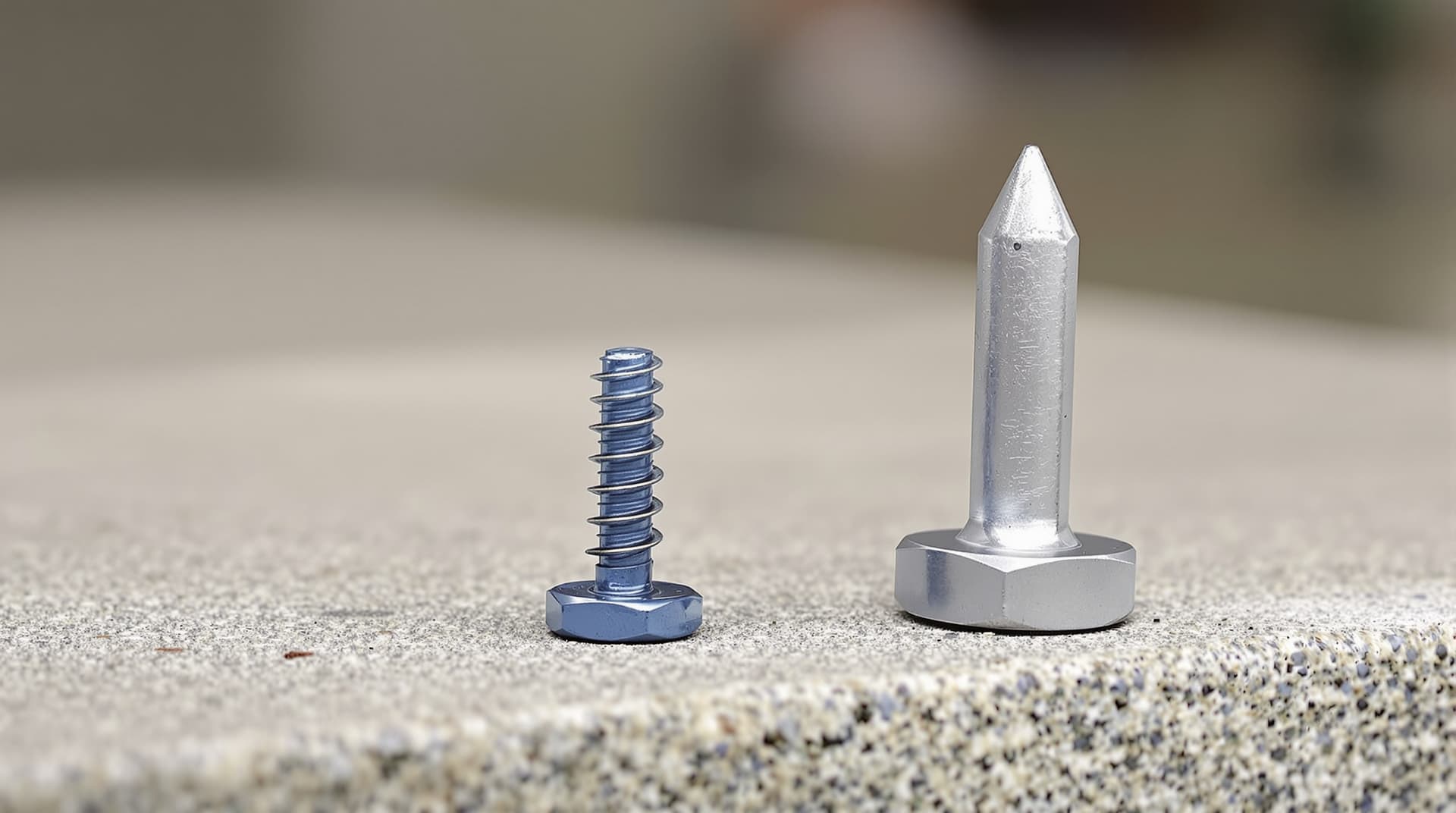
Tapcon is the trade name commonly used for hardened, thread-forming masonry screws. They cut threads into pre-drilled holes in concrete, brick, or block and rely on mechanical thread engagement and friction. Typical sizes for residential/commercial use are 3/16" and 1/4" diameter for light-to-medium loads; larger specialty masonry screws exist for heavier work. Recommended embedment depth is usually 1"–1-1/4" (check manufacturer specs). For the full diameter-by-diameter pilot hole table, see our Tapcon sizing guide.
Concrete anchor bolts (mechanical and adhesive)
"Concrete anchor bolts" is a broad category covering wedge anchors, sleeve anchors, drop-in anchors, hammer-set anchors, and adhesive (epoxy/chemical) anchors. These anchors expand or use an adhesive bond to develop load capacity. Diameters commonly range from 1/4" up to 3/4" and required embedment depths are typically 2"–4" depending on anchor type and load. See our full breakdown of concrete anchor types for how each variant works mechanically.
When to use each
- Use Tapcon screws when you need a fast, repeatable solution for light-to-moderate loads: mounting furring strips, light racks, conduit clips, and attaching metal straps. They're ideal where embedment is shallow and you may remove or reposition hardware.
- Use mechanical anchor bolts when tension (uplift) or heavy shear loads are present — e.g., structural connections, heavy equipment, handrails, or ledger plates. Wedge anchors and sleeve anchors provide predictable expansion holding power under both shear and tension.
- Use adhesive anchors when the base material is cracked or when maximum load capacity is needed in limited embedment depth, or when you must anchor near edges where expansion anchors would split the concrete. Adhesive anchors are common for seismic, structural, and high-load commercial applications.
Installation Comparison
| Factor | Tapcon Screw | Wedge / Sleeve Anchor | Adhesive Anchor |
|---|---|---|---|
| Hole tolerance | Undersized (screw cuts its own threads) | Matched 1:1 to anchor diameter | Matched 1:1, often slightly oversized |
| Installation steps | Drill, clean, drive | Drill, clean, insert, torque to spec | Drill, clean (critical), inject adhesive, insert rod, cure time |
| Time to load-ready | Immediate | Immediate | Hours (cure time varies by product and temperature) |
| Removability | Easy (unscrew) | Permanent (must cut/grind) | Permanent |
| Performance near edges | Good (mechanical interlock, low outward pressure) | Poor (expansion pressure risks edge spalling) | Good (no expansion pressure) |
Approximate Load Capacity Comparison
The figures below are general reference points for a mid-range diameter of each type in solid concrete — actual values vary significantly by manufacturer, embedment, and concrete strength. Use the Anchor Specification Engine for project-specific numbers.
| Anchor | Typical Diameter | Approx. Ultimate Tension |
|---|---|---|
| Tapcon (concrete screw) | 1/4" | ~600 lbs |
| Sleeve anchor | 3/8" | ~1,200 lbs |
| Wedge anchor | 1/2" | ~2,350 lbs |
| Adhesive anchor (threaded rod) | 1/2" | 3,000+ lbs (bond-dependent) |
For the full picture of how these numbers are derived — including how embedment, edge distance, and concrete strength affect them — see how much weight concrete anchors can hold.
Key differences and performance comparison
- Load capacity: Anchor bolts (wedge, sleeve, chemical) generally outperform Tapcons in both tensile and shear capacity due to larger diameters and deeper embedment. Tapcons are for light-to-moderate loads only.
- Embedment depth: Tapcons require shallow embedment (typically ~1"), anchors require deeper embedment (2"–4") for rated strengths.
- Installation speed and reversibility: Tapcons are fast — drill, blow dust, screw. They're easier to remove than expansion anchors. Mechanical anchors take slightly longer; adhesive anchors require mixing, injection, cure time.
- Base material sensitivity: Tapcons work well in uncracked concrete and solid brick; avoid them in hollow block unless you use through-bolts or specialized hollow-wall anchors. Chemical anchors are preferred for cracked concrete or critical structural attachments.
- Vibration and cyclic loads: Mechanical expansion anchors can loosen under vibration; chemical anchors are superior where cyclic loads or freeze-thaw exposure are present. Tapcons can back out under repeated dynamic loads unless properly installed with locking washers or thread-lock.
Pro tips from contractors
- Always use a hammer drill with a carbide masonry bit sized to the anchor: match bit diameter and remove all dust from the hole with compressed air or a stiff brush. If you're unsure about bit choice, consult our guide on choosing the best masonry drill bits.
- Observe proper edge distance and spacing. Under-sizing spacing or putting anchors too close to an edge causes breakout — review spacing and edge distance rules before layout: spacing and edge distance rules.
- For Tapcons, use the manufacturer-recommended torque and don't over-torque — over-torquing can strip the formed threads and reduce capacity.
- For adhesive anchors, follow the adhesive manufacturer's hole cleaning and curing schedule exactly. Improper hole cleaning is the single biggest cause of chemical anchor failures.
- Pre-drill into structural members (timber or steel) where possible so the fastener only engages masonry — this reduces splitting and improves clamping.
Common mistakes to avoid
- Using Tapcons for structural or uplift-loaded connections. They are not intended as primary structural anchors unless specifically rated and designed for that purpose.
- Insufficient embedment. Choosing a shorter anchor to save effort reduces load capacity dramatically; follow manufacturer embedment charts.
- Poor hole cleaning. Dust left in holes cuts bond strength for chemical anchors and reduces friction for Tapcons and expansion anchors.
- Incorrect drill bit size. Oversized holes prevent Tapcons from cutting proper threads, undersized holes can crack the concrete or break the bit.
- Ignoring base material condition. Using expansion anchors in thin slabs or cracked concrete without consulting product specs is a recipe for failure — if in doubt, test the substrate or use adhesive anchors.
Buying advice: what to look for
- Ratings and certifications: Buy anchors with published load tables and ICC/ETL/UL listings where applicable. For structural work, use anchors with ACI or manufacturer-tested values.
- Material and coating: Choose stainless or hot-dip galvanized anchors for exterior or corrosive environments. Standard zinc plating is fine for interior dry locations.
- Matched kits: For one-off jobs, buy pre-matched anchor kits that include the correct drill bit, anchors, and installation instructions — saves time and reduces errors.
- Manufacturer support: Prefer brands that publish clear torque, embedment, and drill size data. If you need to know how to anchor into specific masonry types, manufacturer tech sheets are invaluable.
Final recommendations
Choose Tapcon screws for non-structural, light-to-moderate duty attachments where speed and removability are priorities. For any connection with significant tension, structural importance, or where the substrate is cracked or variable, use mechanical expansion anchors or adhesive anchors sized and installed per manufacturer specs. If you want step-by-step installation best practices, review our step-by-step installation guide before you start. Or skip the decision entirely — the Anchor Specification Engine picks the right anchor type and sizes it for your exact project.
Get the job right: pick the right anchor type, use the correct drill and bit, maintain proper spacing/edge distance, and follow embedment/torque specs. This checklist prevents failures and keeps your install durable and code-compliant.