Types of Concrete Anchors Explained (Sleeve, Wedge, Drop-In, Tapcon)
When you are fastening structural steel to a slab, anchoring sill plates, or hanging heavy uni-strut for HVAC systems, your choice of concrete anchor dictates the safety and longevity of the entire installation. Concrete anchors are not one-size-fits-all hardware. Using the wrong anchor type for your base material or load condition guarantees failure, resulting in spalled concrete, loose fixtures, and major liability.
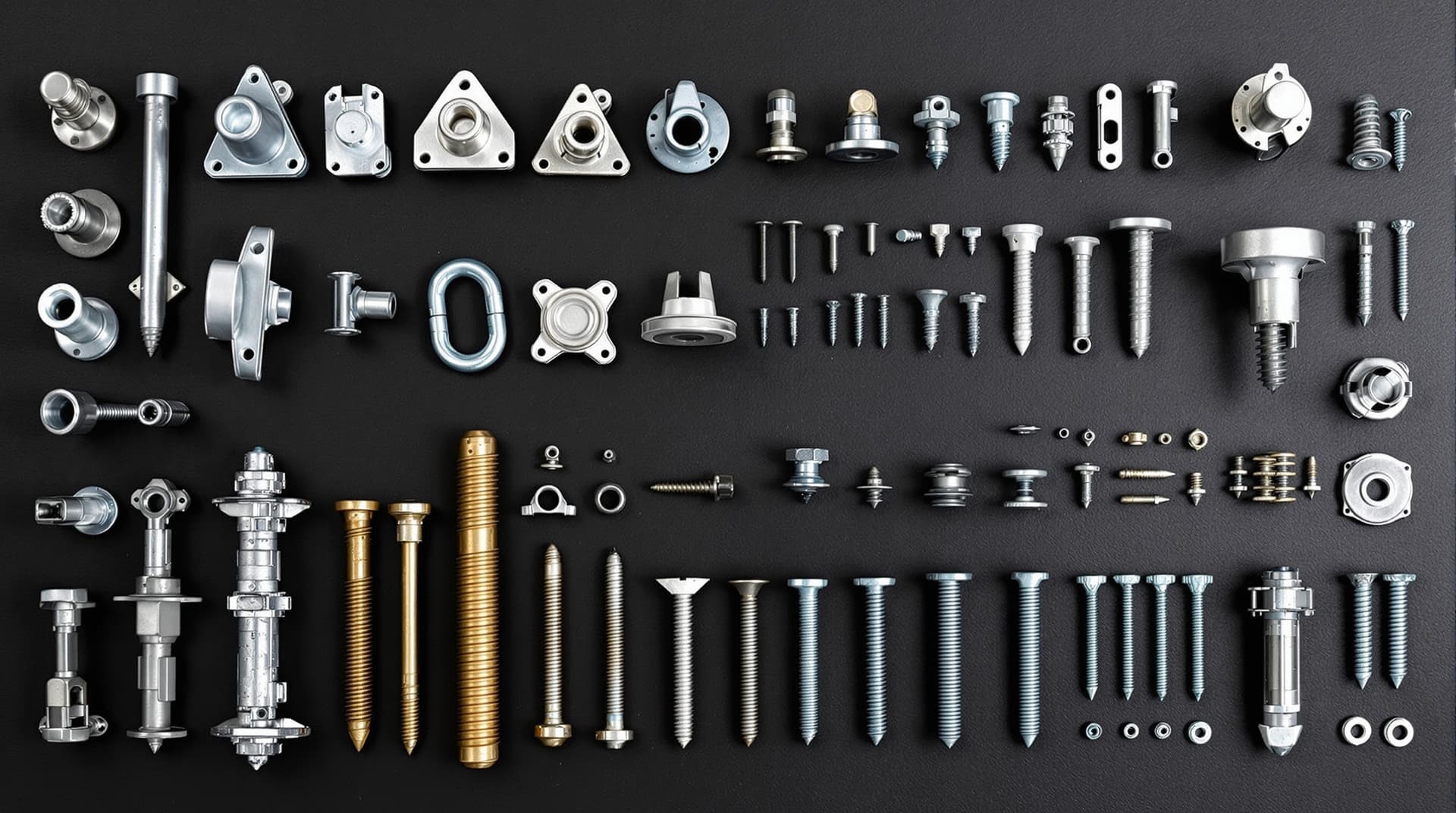
Every contractor and serious tradesperson needs to understand the mechanical differences between the five primary anchor categories: wedge anchors, sleeve anchors, drop-in anchors, concrete screws (Tapcons), and toggle/hollow-wall anchors. Understanding how they expand, grip, and distribute loads will ensure your next installation stays exactly where you put it.
Don't want to guess?
The Anchor Specification Engine takes your substrate, load, and edge conditions and tells you exactly which anchor type to use — plus the diameter, embedment depth, and torque spec, calculated per ACI 318-19.
Wedge Anchors: The Heavyweight Champions
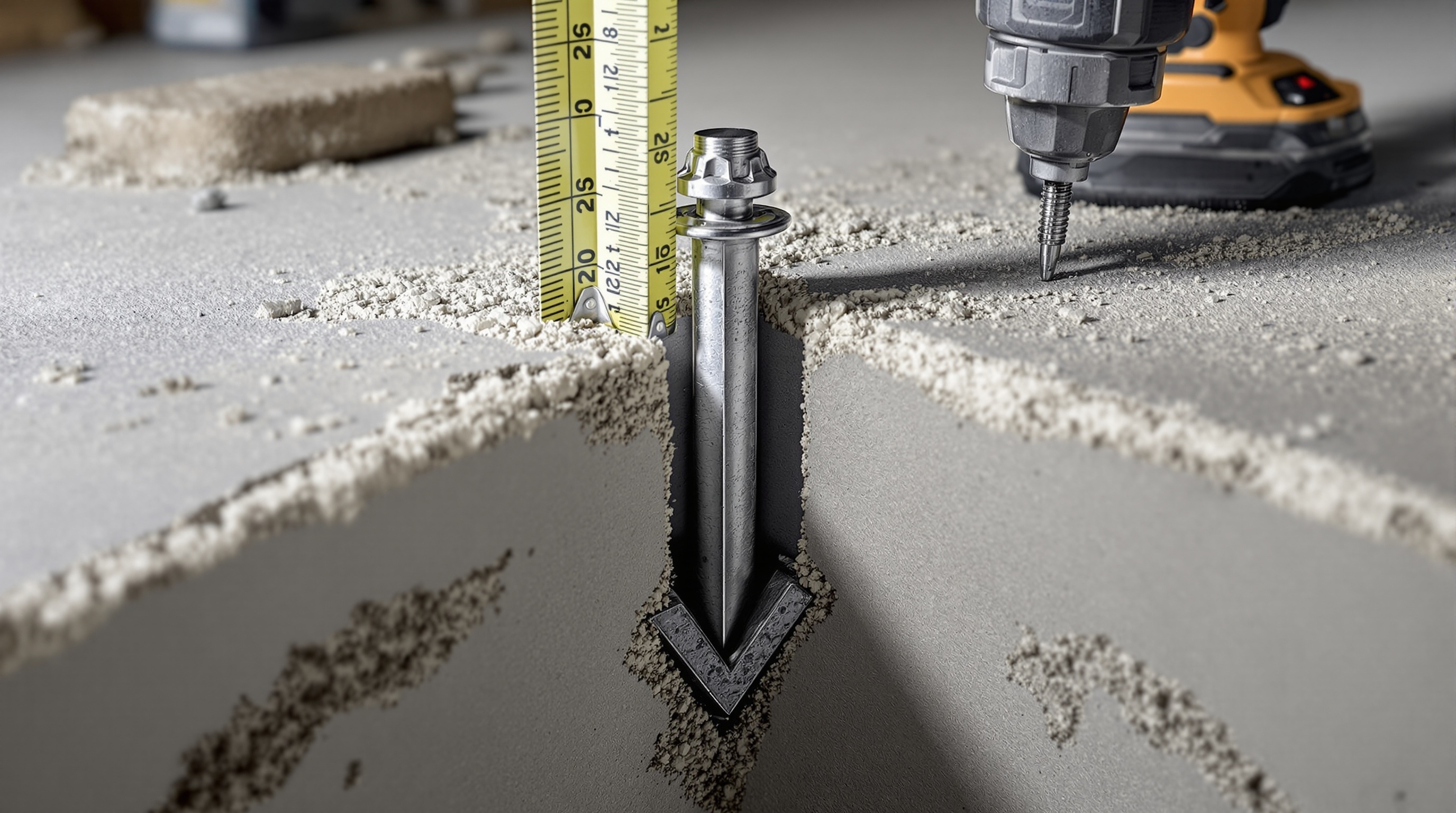
Wedge anchors are the gold standard for heavy-duty, permanent fastening in solid concrete. Also known as expansion bolts or stud anchors, they feature a threaded stud with a cone-shaped end and an expansion clip. When you tighten the nut, the cone is pulled up into the expansion clip, wedging it aggressively against the walls of the concrete hole.
When to Use Them: Structural steel connections, heavy machinery mounting, structural columns, and racking systems. They offer exceptional shear and tensile strength.
Crucial Specs: Wedge anchors can only be used in solid concrete—never in brick, hollow block, or mortar joints. Their expansion force is so immense that they will split masonry or hollow block apart. When determining load ratings and weight capacities, embedment depth is critical. A standard 1/2-inch wedge anchor typically requires a minimum embedment of 2-1/4 inches, but driving it deeper increases its holding value. Brands like Red Head (Trubolt) and Hilti (Kwik Bolt) lead this category.
Sleeve Anchors: The Versatile Option
Sleeve anchors look similar to wedge anchors but operate on a broader scale. Instead of a small expansion clip at the base, a sleeve anchor features a hollow steel tube (the sleeve) that covers the length of the threaded stud. As the nut is tightened, the stud is drawn upward, causing the entire sleeve to expand and grip the surrounding material.
When to Use Them: Because the expansion force is distributed over a larger surface area, sleeve anchors are your go-to choice when anchoring in brick or hollow block. They are ideal for medium-duty applications like securing handrails, mounting electrical panels to cinder block walls, and fastening window frames.
Crucial Specs: Sleeve anchors are highly versatile but lack the extreme heavy-duty pull-out resistance of a wedge anchor in solid concrete. You can find them with various head styles, including acorn nuts, hex nuts, flat countersunk heads, and round heads, making them excellent for aesthetic or flush-mount finishes.
Drop-In Anchors: Flush Mounts and Overhead Hanging
Drop-in anchors are female-threaded anchors designed exclusively for solid concrete. Unlike wedge or sleeve anchors, the drop-in anchor sits completely flush with or slightly below the concrete surface. You insert the anchor into a pre-drilled hole and use a specialized setting tool (a steel punch) and a hammer to strike the internal plug, which expands the bottom of the anchor.
When to Use Them: Drop-in anchors are heavily utilized in commercial MEP (Mechanical, Electrical, and Plumbing) trades. They are the standard for overhead installations, such as suspending cable trays, HVAC ductwork, sprinkler pipes, and lighting grids using threaded rod.
Crucial Specs: Drop-ins allow for the bolt or threaded rod to be removed and replaced without leaving a protruding stud behind. However, they require precise drilling. If your hole is too shallow, the anchor sits proud of the surface; if it is too deep, you won't be able to properly strike the setting plug. You must use the manufacturer-specific setting tool to ensure the anchor is fully expanded.
Concrete Screws (Tapcons): Fast and Removable
Often referred to universally by the dominant brand name "Tapcon," concrete screws are threaded fasteners that tap their own mating threads into concrete, block, and brick. They feature an alternating raised and lowered thread profile (hi-lo thread design) that cuts into the masonry while efficiently clearing dust.
When to Use Them: Concrete screws are ideal for light-to-medium duty applications where speed and removability are priorities. Use them for fastening furring strips, plywood backing boards, junction boxes, and exterior trim.
Crucial Specs: These fasteners require incredibly tight tolerances. Using proper drill bit sizing is non-negotiable. A 3/16-inch concrete screw strictly requires a 5/32-inch bit, and a 1/4-inch screw requires a 3/16-inch bit. Using a worn-out bit will result in a hole that is either too small (causing the screw to snap under torque) or too large (causing the threads to strip out the masonry). For the complete sizing table across every diameter, see our Tapcon sizing guide.
Toggle and Hollow-Wall Anchors: When There's Nothing Solid Behind It
Every anchor type above assumes you're drilling into solid concrete, brick, or filled block. But a huge share of real-world fastening happens into hollow materials — unfilled CMU block cores, hollow brick, or drywall over an open cavity — where none of the expansion-style anchors above have anything solid to push against.
TOGGLER and Snap-Toggle Style Anchors: A small steel bar passes through the hole in its narrow orientation, then springs open flat against the back side of the hollow material once through. As the bolt is tightened, the load is carried by this internal bar bearing against the inside face — giving toggle-style anchors the highest pull-out ratings of any hollow-wall anchor, often rated for 50-100+ lbs per anchor in 1/2" drywall depending on the specific product.
Plastic Expansion Anchors and Winged Anchors: Lower-cost options that expand or flare wings against the back of the hollow material as the screw is driven. Adequate for light-duty items (small shelves, picture frames, light fixtures) but significantly weaker than toggle-style anchors and not appropriate for anything with meaningful pull-out load.
When to Use Them: Hanging items on drywall between studs, mounting to unfilled CMU cores, or any hollow-wall situation where a stud or solid backing isn't available. Never use a wedge, sleeve, or drop-in anchor in hollow material — the expansion force has nothing to react against and will simply blow out the back or side of the cavity.
Crucial Specs: Always verify the wall thickness is within the anchor's rated range — a toggle anchor sized for 1/2" drywall won't deploy correctly behind 5/8" drywall or a thicker wall assembly. If you're unsure whether your wall is solid or hollow, drill a small test hole first; solid material produces continuous resistance and concrete dust, while hollow material gives way suddenly partway through.
Key Differences and Comparisons
When selecting your anchor, base your decision on three primary factors: the base material, the load requirements, and whether the fixture is permanent.
| Anchor Type | Base Material | Removable? | Relative Strength |
|---|---|---|---|
| Wedge Anchor | Solid concrete only | No (permanent) | Highest |
| Sleeve Anchor | Concrete, brick, hollow block | No (permanent) | High |
| Drop-In Anchor | Solid concrete only | Yes (bolt removable) | High |
| Concrete Screw (Tapcon) | Concrete, brick, block | Yes | Light-medium |
| Toggle / Hollow-Wall | Hollow block, drywall | Varies by type | Light-medium |
- Solid Concrete vs. Hollow Material: Use wedge and drop-in anchors strictly for solid concrete. Use sleeve anchors and concrete screws for brick, block, and mortar joints. Use toggle/hollow-wall anchors for unfilled cores and drywall.
- Permanent vs. Removable: Wedge anchors are permanent; once driven in and expanded, you cannot remove them without grinding the stud flush. Concrete screws and drop-in anchors (which accept removable bolts) allow for easy disassembly of fixtures.
- Edge Distance: Wedge anchors create massive internal pressure and require substantial edge distance to prevent "blowout" or cracking at the edge of the slab. Concrete screws create mechanical interlock rather than expansion, allowing them to be placed closer to the edge of the concrete. For exact edge distance requirements, see our anchor spacing and edge distance guide.
For a head-to-head on the two most commonly confused options, see Tapcon screws vs. concrete anchor bolts.
Pro Tips for Professional Installation
Even the strongest anchor will fail if installed improperly. Follow these professional best practices to ensure maximum holding power:
- Clean the Hole: Drilling concrete creates fine silica dust that acts like a dry lubricant. If you leave this dust in the hole, your anchor will grip dust instead of solid concrete, reducing its holding power by up to 50%. Always blow out the hole with compressed air, brush the walls with a wire brush, and blow it out a second time.
- Over-Drill the Depth: Always drill your hole at least 1/2-inch deeper than the anchor's intended embedment depth. This provides a cavity for any remaining dust to settle into as the anchor is driven in, preventing the anchor from bottoming out early.
- Use the Right Tools: Ditch the standard drill for heavy anchoring. Use a dedicated SDS-Plus or SDS-Max rotary hammer paired with a premium, carbide-tipped quality concrete drill bit. Standard hammer drills take too long and often wallow out the hole, causing a loose fit.
Common Mistakes to Avoid
Preventing callbacks and failures comes down to avoiding frequent installation errors. The most prevalent mistake contractors make is over-torquing the anchor. While it is tempting to hit a wedge or sleeve anchor with an impact wrench until it stops spinning, this often stretches the threads, shears the bolt, or spins the expansion clip out of its socket deep in the concrete.
Instead, use a calibrated torque wrench. A standard 1/2-inch wedge anchor typically requires around 40 to 50 foot-pounds of torque, which is easily achievable with hand tools. Consult the manufacturer's spec sheet for exact torque values — or let the Anchor Specification Engine calculate the correct torque for your specific anchor automatically.
Buying Advice: Materials and Coatings
Selecting the right mechanical design is only half the battle; you must also select the correct metal composition for your environment.
- Zinc-Plated Carbon Steel: The standard for indoor, dry environments. Cost-effective but will rust quickly if exposed to moisture.
- Hot-Dipped Galvanized (HDG): Coated with a thick layer of zinc, these are suitable for outdoor environments and treated lumber (like sill plates), where standard zinc plating would corrode.
- Stainless Steel (Type 304 and 316): The ultimate choice for wet environments, coastal regions, and chemical exposure. Type 304 is great for general outdoor use, while Type 316 provides marine-grade corrosion resistance. If you are mounting a pool handrail or working near salt water, 316 stainless is your only viable option.
Conclusion
Selecting the correct concrete anchor guarantees structural integrity and protects against catastrophic failure. By matching the anchor type to your base material — reserving wedge and drop-in anchors for solid concrete, sleeve anchors and concrete screws for masonry and block, and toggle-style anchors for hollow material — you set the foundation for a secure hold. Always respect the manufacturer's tolerances, clean your holes obsessively, and tighten to the specified torque, or let the Anchor Specification Engine do the calculation for you. In the trades, there is no room for guesswork when dealing with structural fastening.