What Size Drill Bit for Concrete Anchors? (Complete Sizing Guide by Anchor Type)
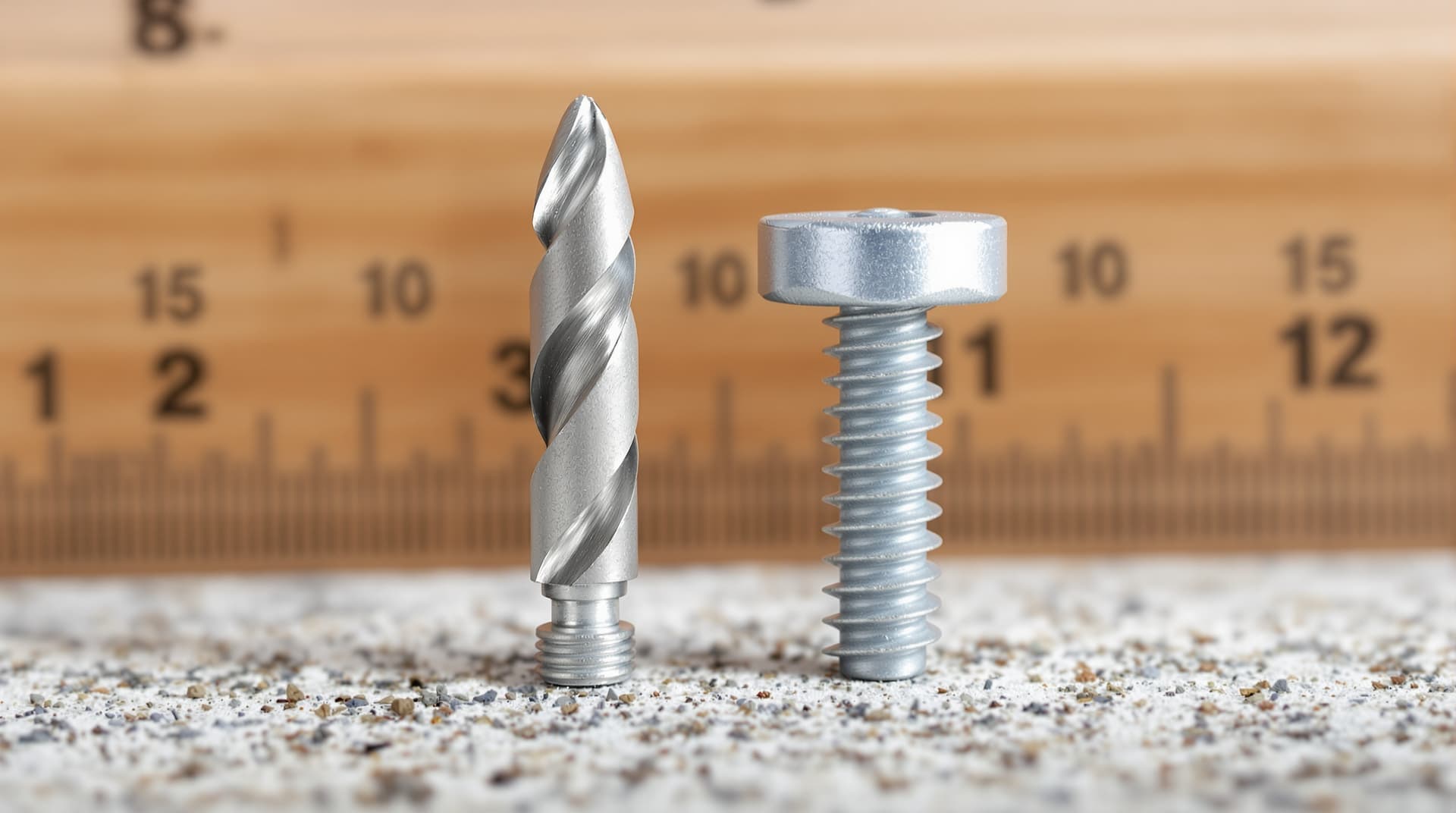
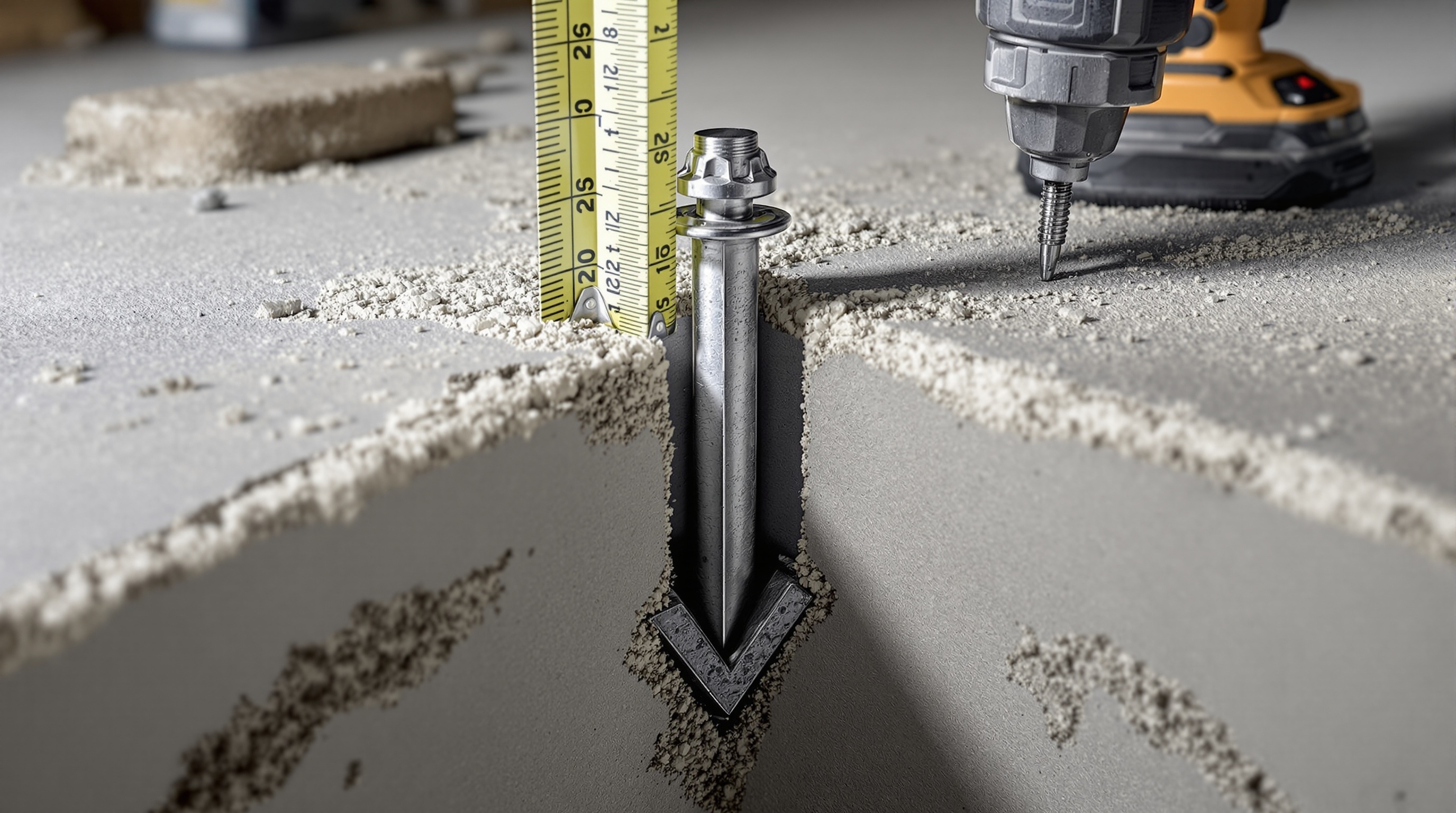
Getting the drill bit size right is the single most important step in installing a concrete anchor — and it's also the step most people get wrong. Drill the hole too small and the anchor jams or bends before it seats. Drill it too large and the anchor spins uselessly with zero holding power. Unlike wood, concrete doesn't compress or forgive a slightly-off hole: the tolerance between "rock solid" and "pulls out under load" is often less than 1/16 of an inch.
This guide covers the exact bit-sizing rules for every major type of concrete anchor — wedge anchors, sleeve anchors, concrete screws (Tapcons), and drop-in anchors — plus the drilling technique and bit selection that determines whether your hole actually performs at its rated capacity.
The Golden Rule: Sizing Depends on the Anchor Type, Not the Bolt
In woodworking, you size a pilot hole relative to the screw's shank. In masonry, the rule changes completely depending on which mechanical anchor you're using — some require an exact 1:1 match to the stated anchor diameter, some require a deliberately undersized hole, and others require a hole significantly larger than the internal thread size. Always check the manufacturer's stamped specification on the packaging first; the rules below cover the standard industry conventions used across most major brands.
Drill Bit Sizing by Anchor Type
Wedge Anchors — Bit Size = Anchor Diameter (1:1)
Wedge anchors (Simpson Strong-Bolt 2, Hilti Kwik Bolt, Red Head Trubolt) are heavy-duty fasteners for structural base plates, racking, and framing. They work via an expansion clip at the base that flares out as the nut is torqued.
- 3/8" wedge anchor → 3/8" masonry bit
- 1/2" wedge anchor → 1/2" masonry bit
- 5/8" wedge anchor → 5/8" masonry bit
The hole must match the stated diameter exactly — the expansion clip is engineered to compress slightly into a precisely matched hole and grip the concrete walls once torqued.
Sleeve Anchors — Bit Size = Outer Sleeve Diameter (1:1)
Sleeve anchors expand along their full length via an outer metal sleeve, making them a good choice for hollow block or lower-PSI concrete. The stated size refers to the outside diameter of the sleeve, not the internal bolt (which is usually one size smaller).
- 1/4" sleeve anchor → 1/4" masonry bit
- 3/8" sleeve anchor → 3/8" masonry bit
- 1/2" sleeve anchor → 1/2" masonry bit
Concrete Screws / Tapcons — Bit Size = Undersized
Tapcons and other concrete screws cut their own threads into the masonry as they're driven. Thread engagement is the only source of holding power, so the hole must be deliberately undersized — too large and the threads have nothing to bite into; too small and the screw shears off during installation.
- 3/16" concrete screw → 5/32" masonry bit
- 1/4" concrete screw → 3/16" masonry bit
- 3/8" heavy-duty concrete screw → 5/16" masonry bit (verify against packaging — some heavy-duty screws specify slightly different undersizing)
For a deeper comparison of when to choose Tapcons vs. expansion-style anchors, see our guide on Tapcon screws vs. concrete anchor bolts. For the full diameter-by-diameter pilot hole table and installation details, see our Tapcon screw sizing guide.
Drop-In Anchors — Bit Size = Outer Shield Diameter (Oversized vs. Internal Thread)
Drop-in anchors are internally-threaded cylinders set flush into concrete, then expanded with a setting tool so a separate bolt can be threaded in later. Because the bit must match the outer shield diameter — not the internal thread — the required bit is noticeably larger than the bolt size you'll eventually use.
- 1/4" drop-in (internal thread) → 3/8" bit
- 3/8" drop-in (internal thread) → 1/2" bit
- 1/2" drop-in (internal thread) → 5/8" bit
Don't want to memorize sizing tables?
Our free Anchor Specification Engine calculates the exact bit size, embedment depth, and torque value for your specific anchor and substrate — per ACI 318-19 — in under a minute. Answer a few questions about your project and skip the lookup tables entirely.
Try the Anchor Specification Engine →Substrate Matters as Much as Anchor Size
Solid, fully-cured, high-PSI poured concrete can handle the expansion forces of heavy-duty 5/8" or 3/4" wedge anchors. But the same anchor in brick or hollow block will split the masonry and destroy the wall's structural integrity. In hollow or brittle substrates, size down to a sleeve anchor, toggle bolt, or 1/4" concrete screw — these distribute expansion force more evenly without cracking the base material.
Bit Type and Shank: SDS vs. Straight-Shank
Getting the diameter right is only half the equation — your bit also has to mate correctly with your tool. Straight-shank carbide bits work fine in a standard drill chuck for a handful of light-duty 3/16" Tapcon holes. But for 1/2" wedge anchors in 4,000 PSI cured concrete, you need an SDS-Plus or SDS-Max rotary hammer. SDS bits have slotted shanks that let the bit move independently of the chuck, transferring the hammer's striking energy directly into the carbide tip rather than absorbing it into the tool body — the difference between drilling a clean hole in seconds versus burning out a bit in minutes.
Pro Drilling Technique (This Matters As Much As Bit Size)
- Over-drill the depth. Drill 1/4"–1/2" deeper than the anchor's required embedment. Concrete dust settles at the bottom of the hole as you drill — without extra depth, the anchor bottoms out on debris before it seats flush.
- Use a depth gauge. Wrap a piece of painter's tape around the bit at your target depth, or use the depth rod on your rotary hammer's side handle, so every hole comes out consistent.
- Clear the dust — every time. Dust acts like a dry lubricant and drastically reduces the friction that wedge and sleeve anchors rely on to grip. Blow out every hole with compressed air, a blowout bulb, or a shop vac with a narrow nozzle before inserting the anchor.
- Let the hammer action do the work. Leaning your full body weight into the drill doesn't drill faster — it binds the bit, generates excess heat, and dulls the carbide tip prematurely. Apply steady, moderate pressure.
- Pull the bit out straight. Angling or aggressively spinning the drill as you withdraw "wallows out" the hole into a cone shape. An anchor in a wallowed hole wobbles and fails under load — this is one of the most common causes of anchor installation failures.
Common Mistakes That Ruin a Correctly-Sized Hole
Worn carbide tips. Masonry bits wear down with use. A 1/2" bit that's drilled 100 holes in reinforced concrete may now be cutting a 15/32" hole — undersized enough that a 1/2" wedge anchor will bend or jam trying to seat. If your bits have seen heavy use, measure them before assuming the size is still correct.
Hitting rebar. If you suddenly hit extreme resistance and see metallic shavings in the flutes, you've struck structural rebar. Standard masonry bits will overheat and fail against steel — stop immediately and either relocate the hole or switch to a dedicated rebar-cutting bit.
"Reaming" the hole to make the anchor fit. If an anchor doesn't go in easily, the fix is never to wiggle the bit around to widen the hole. This destroys the parallel tolerance the anchor needs to grip and all but guarantees pull-out failure under load.
Choosing the Right Bits
Skip unbranded multi-packs for anything structural. Look for ANSI B212.15-certified carbide bits from Bosch (Bulldog / Bulldog Xtreme), Milwaukee (MX4 / M/2), or DeWalt (ROCK CARBIDE / High Impact). For holes 3/8" and larger, choose a 4-cutter carbide head over a standard 2-cutter — 4-cutter designs drill rounder, more accurately centered holes and are far less likely to bind or snap if you graze rebar.
Quick-Reference Summary
| Anchor Type | Sizing Rule |
|---|---|
| Wedge anchor | Bit = stated anchor diameter (1:1) |
| Sleeve anchor | Bit = outer sleeve diameter (1:1) |
| Concrete screw / Tapcon | Bit = undersized per manufacturer spec |
| Drop-in anchor | Bit = outer shield diameter (larger than internal thread) |
Conclusion
Matching your drill bit to your anchor type isn't a minor detail — it's the difference between a connection that holds for decades and one that fails the first time it's loaded. Match 1:1 for wedge and sleeve anchors, undersize for concrete screws, and use the outer shield diameter for drop-ins. Pair the correct bit size with ANSI-certified carbide, careful dust clearing, and straight withdrawal technique, and your anchors will perform at their full rated capacity every time. Or, if you'd rather not look any of this up, let the Anchor Specification Engine calculate it for your exact project in under a minute.