Common Mistakes When Installing Concrete Anchors (And How to Avoid Them)
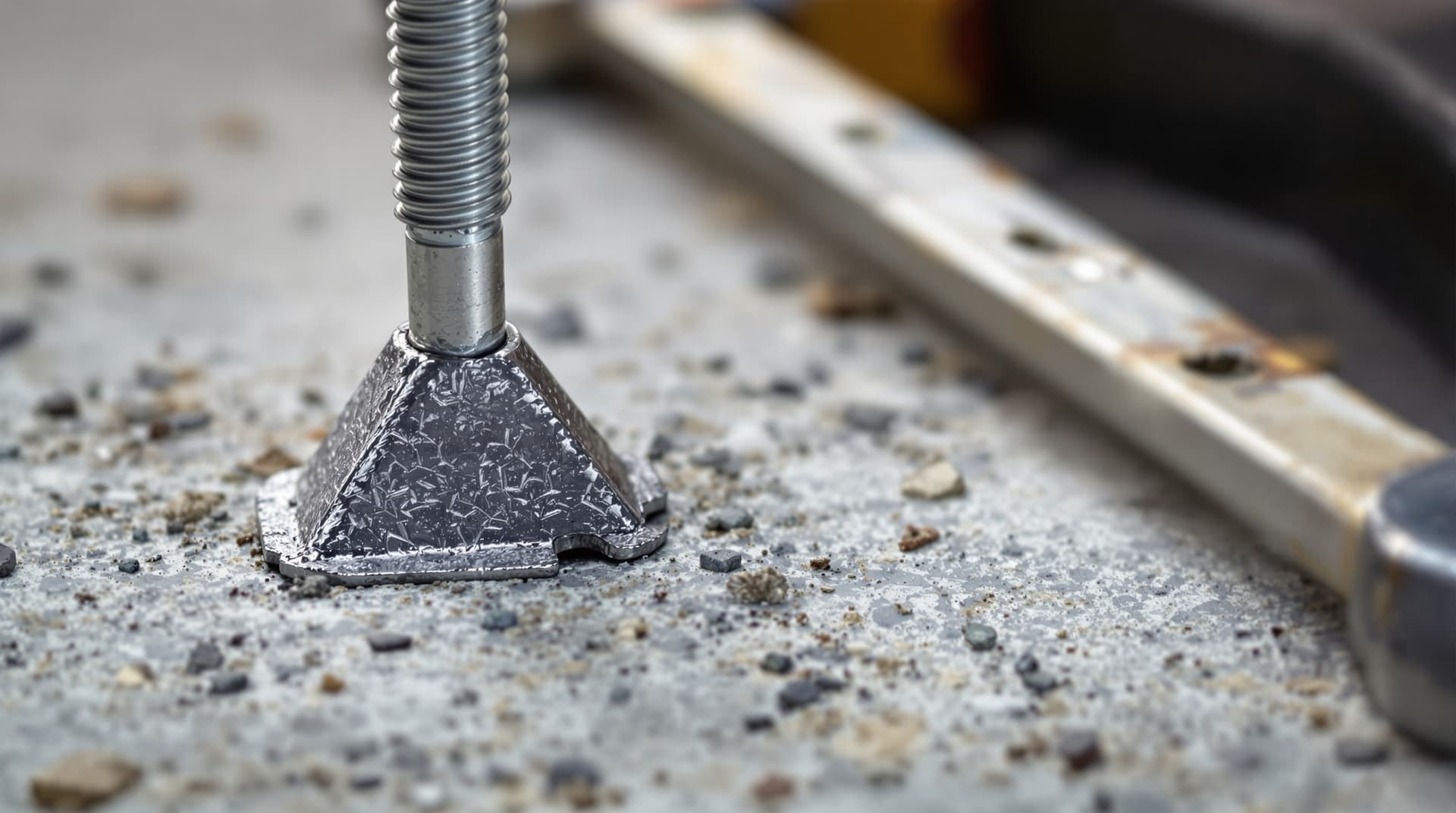
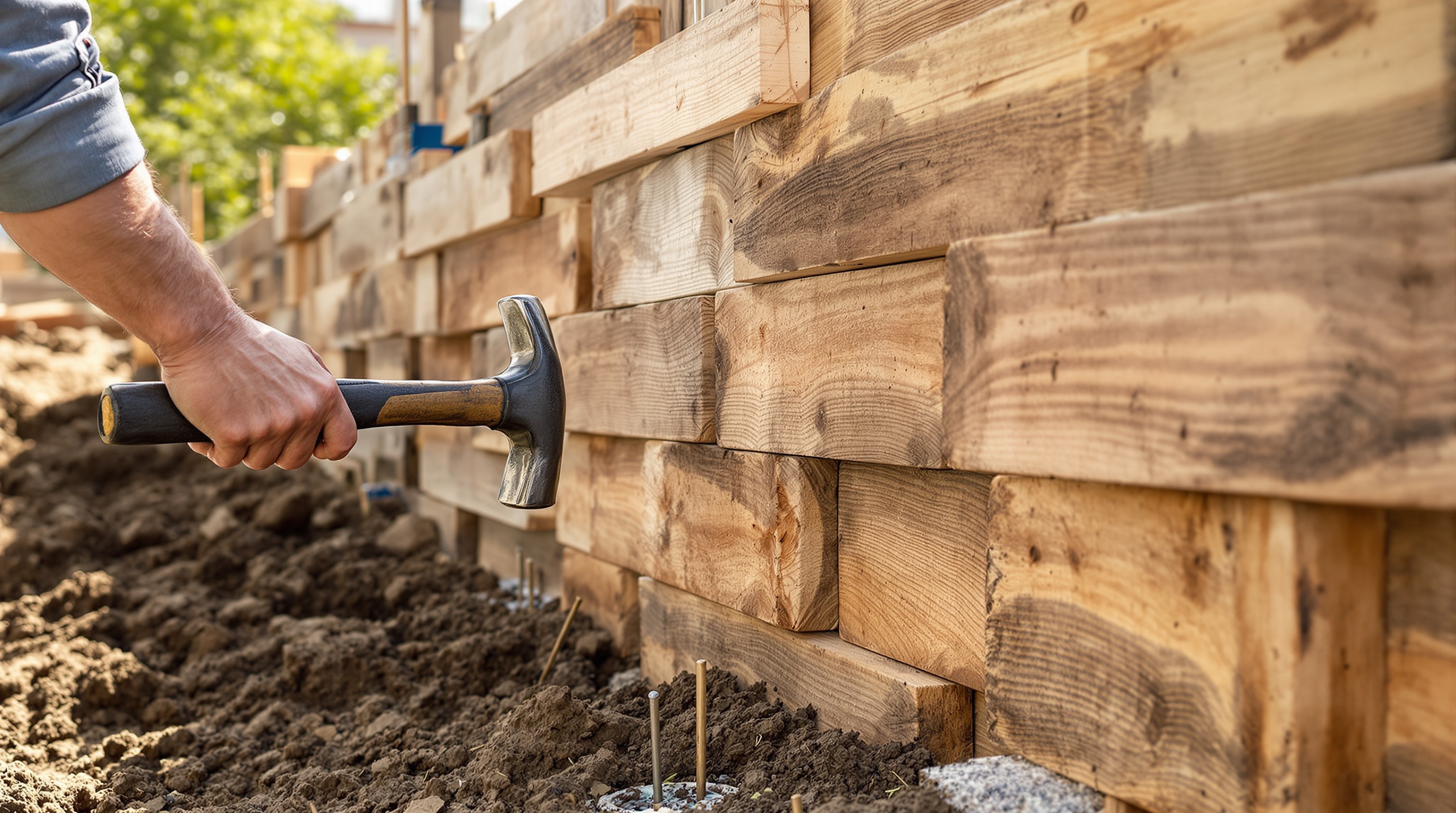
Concrete anchors failing under a heavy load is rarely a manufacturing defect—it is almost always an installation failure. Whether you are a professional contractor mounting a 500-pound unistrut rack, or a serious DIYer hanging heavy garage shelving, concrete anchors demand precise installation. When mechanical or chemical anchors are installed improperly, their holding power is drastically reduced, creating an immediate safety hazard.
Most anchor problems are entirely avoidable. By understanding the mechanics of how these fasteners grip the base material and strictly following manufacturer specifications, you can guarantee a rock-solid hold every time. This guide breaks down the science of concrete anchors, the most critical installation mistakes to avoid, and the pro-level techniques you need to do the job right.
Overview: How Concrete Anchors Actually Work
To understand why installation mistakes are so catastrophic, you must understand how concrete anchors achieve their holding power. Unlike wood screws, which bite directly into yielding wood fibers, concrete anchors rely on three primary mechanisms: friction, keying (mechanical interlock), and chemical bonding.
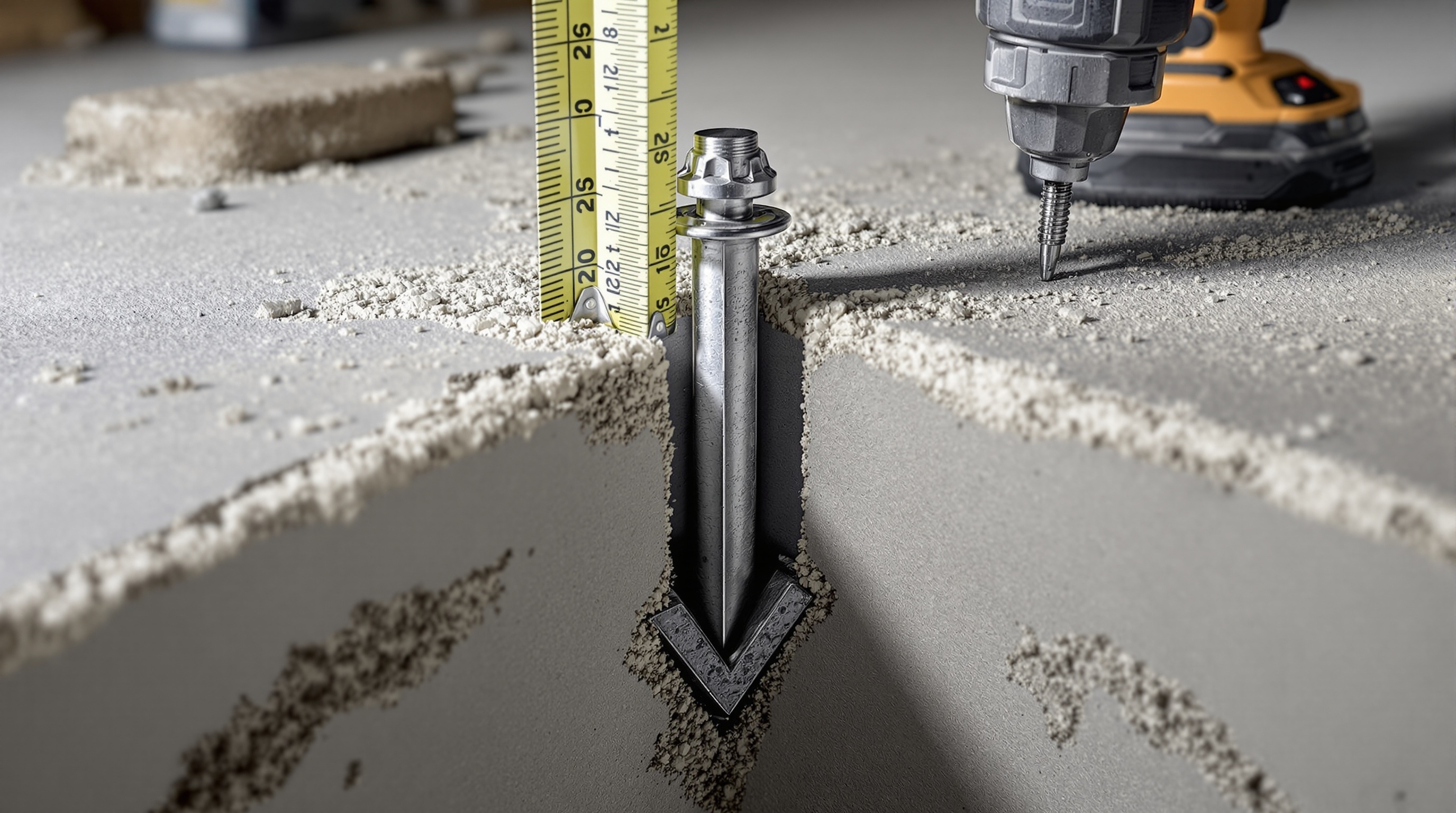
- Friction Expansion: Anchors like wedge anchors and sleeve anchors rely on a torque-controlled expansion clip. As you tighten the nut, the wedge is pulled up into the clip, expanding it forcefully against the walls of the concrete hole.
- Mechanical Keying: Concrete screws (often referred to by the brand name Tapcon) feature hardened, hi-low threads that physically cut grooves into the masonry, interlocking with the base material.
- Chemical Adhesion: Two-part epoxy systems bond threaded rods or rebar directly to the pores of the concrete, offering the highest load capacities available.
Understanding the precise mechanics behind these fasteners is critical to ensuring they can safely bear their maximum rated loads without shifting, loosening, or pulling out.
When to Use Specific Concrete Anchors
Selecting the right anchor for the job is the first step in avoiding catastrophic failure. There is no one-size-fits-all masonry fastener.
Wedge Anchors: Best for heavy-duty, static loads in solid concrete. These are the go-to choice for mounting steel columns, heavy structural ledgers, and industrial machinery. They should never be used in hollow block or brick, as the expansion force will easily blow out the masonry webbing.
Sleeve Anchors: Ideal for hollow masonry materials like cinder block, brick, or masonry with unknown internal structures. The longer expansion sleeve distributes the pressure over a wider surface area, reducing the risk of cracking the base material.
Concrete Screws (Thread-Cutting): Excellent for light to medium-duty applications, such as securing 2x4 furring strips, electrical junction boxes, or window frames. They install quickly and can be removed, unlike wedge anchors.
Key Differences in Installation Dynamics
The failure points vary drastically depending on the type of anchor you select. When deciding between threaded masonry screws and expansion bolts, you must recognize that their installation tolerances are vastly different.
For a wedge anchor, a hole drilled too wide means the expansion clip cannot bite the concrete—the anchor will simply spin when you attempt to torque the nut. For a concrete screw, a hole drilled too small means the fastener will bind, often resulting in the hardened steel screw snapping off flush with the concrete surface before it is fully seated. Precision is non-negotiable for both.
The 5 Most Common Concrete Anchor Installation Mistakes
1. Failing to Clean the Drill Hole
This is the single most common cause of anchor failure. When you drill into concrete, the process creates a significant volume of fine silica dust. If you simply insert an anchor into an uncleaned hole, that trapped dust acts like microscopic ball bearings.
When the expansion clip tries to grip the concrete walls, it grips loose dust instead, severely reducing friction. For adhesive anchors, dust completely prevents the epoxy from bonding to the concrete pores, leading to a 50% or greater reduction in holding capacity. Always use the "blow-brush-blow" method: use a blowout bulb or compressed air to clear the dust, scrub the hole with a wire pipe brush, and blow it out one final time.
2. Using the Wrong Drill Bit Size or Type
Concrete anchors require exacting hole tolerances. A 1/2-inch wedge anchor requires a precisely 1/2-inch hole. Using an old, worn-out masonry bit will yield an undersized hole, forcing you to hammer the anchor in too aggressively and damaging the threads. Conversely, a cheap bit that wobbles in the chuck will create an oversized, ovalized hole, rendering the anchor useless.
Concrete screws are even more sensitive. A 1/4-inch Tapcon requires a 3/16-inch bit, while a 3/16-inch Tapcon requires a 5/32-inch bit. Using high-quality, ANSI-rated carbide bits is essential for choosing the correct bit diameter and maintaining the strict tolerances required by the fastener manufacturer.
3. Ignoring Edge Distance and Spacing Requirements
Concrete has immense compressive strength but terrible tensile (pulling) strength. If you install an expansion anchor too close to the edge of a concrete slab, the expansive forces will easily blow out the side of the concrete (known as spalling).
As a strict rule of thumb, always adhere to the manufacturer's minimum spacing requirements from the edge. For a standard wedge anchor, this is typically a minimum of 5 to 6 times the anchor diameter from any unsupported edge, and 10 times the anchor diameter away from any other anchors to prevent their stress cones from overlapping.
4. Over-Torquing the Fastener
Many DIYers and inexperienced contractors grab an impact wrench and drive the anchor nut until the tool stops hammering. This is a massive mistake. Over-torquing a wedge anchor pulls the wedge too far past the expansion clip, crushing the concrete locally and actually reducing the fastener’s holding power. It can also sheer the bolt head off entirely.
Always use a calibrated torque wrench. For example, a 1/2-inch ITW Red Head Trubolt requires exactly 55 ft-lbs of torque. A 3/8-inch Hilti Kwik Hus-EZ requires specific torque specs based on embedment depth. Read the box and follow the numbers.
5. Insufficient Hole Depth (Embedment Failure)
If you drill a hole to the exact length of the anchor, you will run into trouble. The dust that falls to the bottom of the hole will prevent the anchor from seating fully. The fastener will bottom out, preventing the nut from clamping tightly against the fixture.
Always drill the hole a minimum of 1/4-inch to 1/2-inch deeper than the expected embedment depth of the anchor. This creates a small cavity at the bottom of the hole for residual dust to settle without interfering with the anchor's physical seating.
Pro Tips for Flawless Installation
- Use a Depth Gauge: If your hammer drill doesn't have an integrated metal depth rod, wrap a piece of highly visible painter's tape tightly around your drill bit to mark the exact depth you need to reach.
- Upgrade Your Tooling: If you are drilling holes larger than 3/8-inch, stop using a standard 18V combi drill on the hammer setting. When choosing between an SDS rotary hammer and a standard combi drill, an SDS-Plus rotary hammer is vastly superior. It uses electro-pneumatic hammering that pulverizes concrete in seconds, rather than relying on the mechanical slipping gears of a standard drill.
- Thread Protection: When hammering a wedge anchor into a tight hole, always thread the nut onto the top of the anchor until it is flush with the top of the bolt. Hammering directly on the bare threads will mushroom the steel, making it impossible to remove or tighten the nut later.
Buying Advice: Quality Matters in Masonry Fastening
Never cheap out on concrete anchors. Avoid unbranded, generic zinc anchors found in bin-assortments online. You have no guarantee of the steel grade, the expansion clip metallurgy, or the load ratings.
Stick to highly reputable brands that publish detailed technical data sheets and ICC-ES evaluation reports. Industry leaders include Simpson Strong-Tie, Hilti, DeWalt/Powers Fasteners, and ITW Red Head.
Furthermore, match the anchor's coating to the environment. Standard zinc-plated anchors are fine for dry, indoor applications (like bolting a safe to a basement floor). For outdoor environments, treated lumber applications, or areas exposed to moisture, you must upgrade to Hot-Dipped Galvanized (HDG) or Type 304/316 Stainless Steel anchors to prevent rapid galvanic corrosion and catastrophic rust failure.
Conclusion
Installing concrete anchors does not have to be a gamble. When an anchor pulls out or shears, the root cause almost always points back to a skipped step during the drilling, cleaning, or torquing phase. By using high-quality carbide bits, meticulously cleaning the concrete dust from your holes, respecting edge distance requirements, and applying the exact torque specified by the manufacturer, you will ensure a professional-grade hold. Treat the installation process as a precise mechanical operation rather than a brute-force task, and your structural connections will perform safely for decades.