Types of Concrete Fasteners Explained
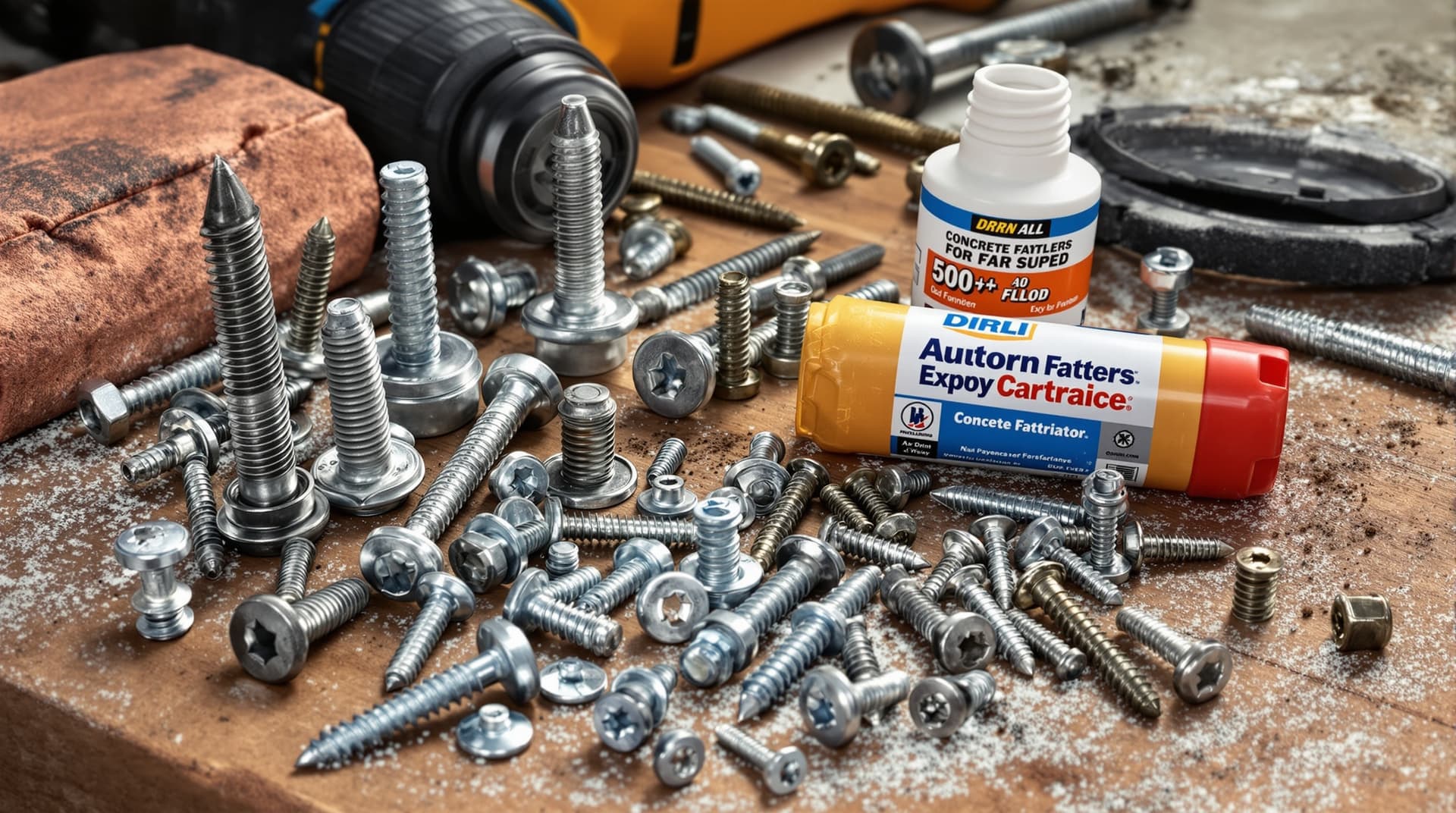
Securing structural steel, mounting heavy ledger boards, or bolting down industrial equipment requires more than a standard lag screw. Wood yields and compresses around a fastener; concrete, brick, and cinder block are completely unforgiving. Fastening into masonry requires mechanical expansion, threaded interlocking, or chemical adhesion to generate enough friction to lock the fastener in place.
Choosing the wrong anchor will result in catastrophic failure under load. Whether you are framing a commercial basement or selecting residential concrete fasteners for a garage shelving unit, matching the anchor type to the substrate is non-negotiable. This guide breaks down the core types of concrete fasteners, exactly how they function, and the structural applications where they perform best.
Already know your load and substrate?
The Anchor Specification Engine skips the comparison shopping and returns the exact anchor type, diameter, embedment, and torque for your specific project — per ACI 318-19.
Overview: How Concrete Fasteners Work
Before diving into specific anchors, you must understand the two primary forces every fastener must resist:
- Tension (Pull-Out) Load: The force attempting to pull the anchor straight out of the concrete. Think of a ceiling-mounted pipe hanger or a heavily loaded cantilevered shelf.
- Shear Load: The downward or lateral force applied perpendicular to the fastener. Think of a ledger board holding up a deck; gravity is trying to slice the bolt in half.
To resist these forces, concrete fasteners rely on one of three mechanisms: mechanical expansion (wedging against the sides of the drilled hole), thread cutting (carving grooves into the masonry wall), or chemical bonding (an adhesive that fuses the fastener to the concrete itself). Relying on the wrong mechanism for your substrate guarantees failure. For the engineering basis behind these mechanisms and their failure modes, see ACI 318-19 explained for homeowners.
The Heavy Hitters: Types of Concrete Fasteners
Wedge Anchors
Wedge anchors offer the highest holding power of any mechanical concrete fastener, making them the gold standard for heavy-duty, permanent applications. When you tighten the nut on a wedge anchor, it pulls a tapered cone up into an expansion clip, wedging it aggressively against the sides of the hole.
When to use them: Securing sill plates, installing vehicle lifts, mounting structural steel columns, and fastening heavy machinery.
The Catch: Wedge anchors can only be used in solid concrete. If you deploy them in hollow CMU (concrete masonry unit) block, brick, or mortar, the intense point-load expansion will shatter the base material. They require strict minimum embedment depths (typically 4x the anchor diameter) and heavy torque to set properly — see our embedment depth guide for why this depth requirement matters so much.
Sleeve Anchors
Sleeve anchors are the ultimate problem solvers for unpredictable or hollow masonry. They consist of a threaded stud surrounded by a full-length tubular steel sleeve. As you tighten the fastener, the stud is drawn up, causing the entire sleeve to flare and compress against the hole.
When to use them: Fastening into hollow concrete block, solid brick, grout-filled block, and older, softer masonry where wedge anchors would cause blowout.
The Catch: While highly versatile, they generally offer lower shear and tension ratings than wedge anchors of the same diameter. Because they distribute expansion forces over a wider area, they are ideal for softer substrates, but you must account for lower maximum load capacities.
Drop-In Anchors
Drop-in anchors are female-threaded inserts designed for flush installations in solid concrete. You drop the anchor into a pre-drilled hole and use a specialized manual striking tool to hammer an internal plug to the bottom. This expands the outer shield of the anchor outward.
When to use them: Suspending overhead threaded rod for HVAC ductwork, commercial plumbing runs, electrical cable trays, and bolted machinery that may need to be unbolted and moved later.
The Catch: They require proper setting techniques using a specific steel setting tool and a heavy hammer. If you don't hear the distinct "solid ring" of the strike tool bottoming out, the anchor is not fully expanded and will fail under load. Once set, they are entirely permanent.
Concrete Screws (Tapcons)
Unlike expansion anchors, concrete screws utilize a hi-lo thread design to physically cut threads into the concrete as they are driven. They are incredibly fast to install, easily removable, and do not impart outward expansion stress on the base material.
When to use them: Securing furring strips, electrical boxes, conduit straps, and light fixtures. They work flawlessly close to the edge of concrete because there is no expansion force threatening to blow out the side of the slab.
The Catch: They are strictly for light-to-medium duty applications. More importantly, success relies entirely on matching your hole diameter to the fastener perfectly. A 1/4-inch concrete screw demands a highly specific 3/16-inch masonry bit; if the hole is even slightly oversized due to bit wobble, the threads will strip the concrete and spin uselessly. See our Tapcon sizing guide for the full table.
Hammer Drive Anchors (Strike Anchors)
These consist of a zinc-plated or Zamac alloy body and a steel drive nail. You insert the anchor through the fixture into the hole and strike the nail head flush with a hammer. Driving the nail expands the body of the anchor in the hole.
When to use them: Permanent, light-duty mounting for drywall track, roofing flashing, and signs.
The Catch: They are tamper-resistant, meaning once you hammer them in, they cannot be backed out without grinding off the head. They are also not rated for heavy structural loads or overhead use.
Adhesive (Chemical/Epoxy) Anchors
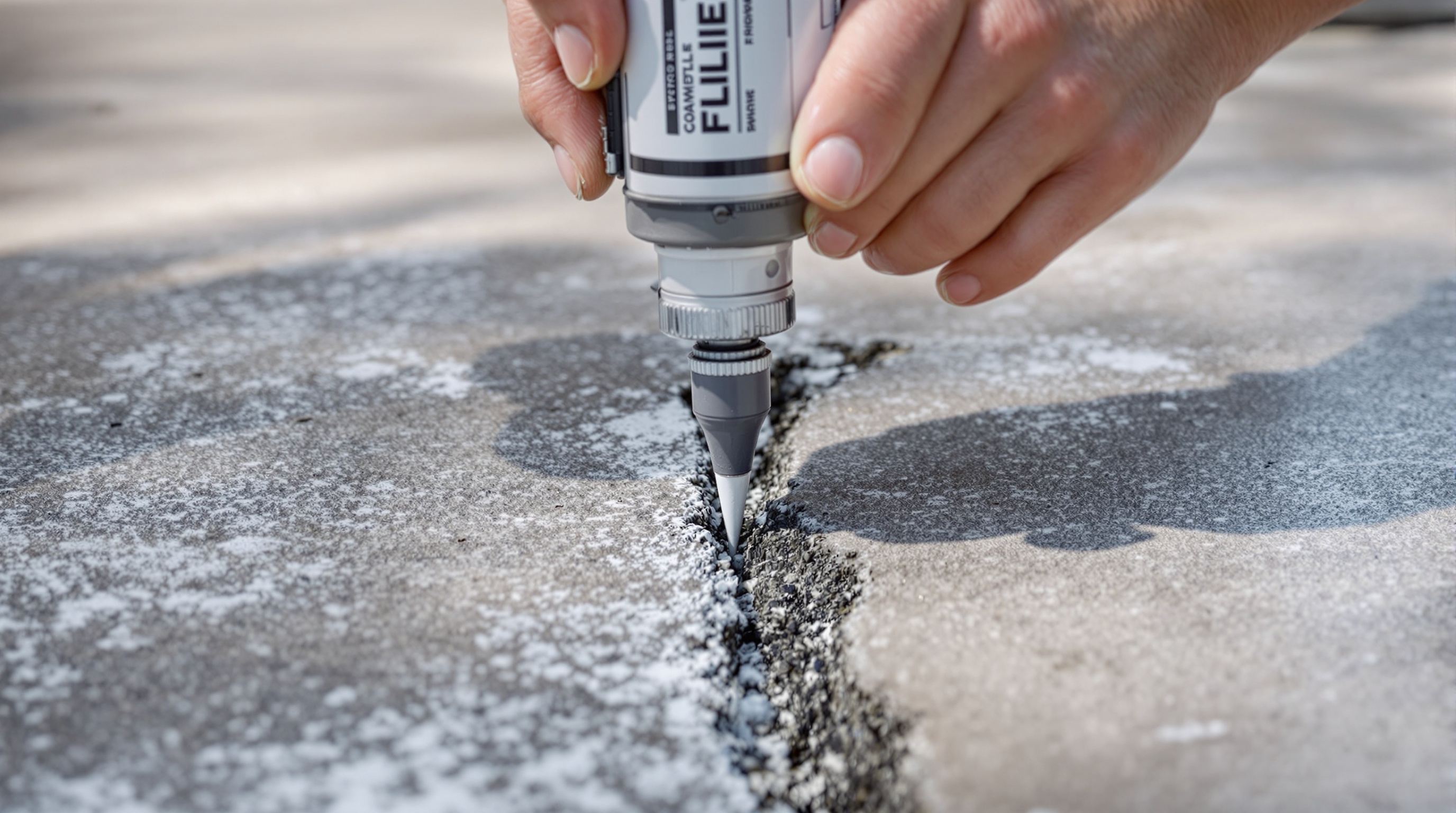
Adhesive anchors work on a completely different principle than everything above: instead of expanding mechanically, a two-part epoxy or polyester resin is injected into the drilled hole, and a threaded rod or piece of rebar is inserted into the wet adhesive. The adhesive cures and chemically bonds to both the rod and the pores of the surrounding concrete — there's no outward expansion force at all.
When to use them: High-vibration equipment mounts (mechanical anchors can work loose over time under sustained vibration; adhesive bonds don't), installations very close to a slab edge (no expansion pressure means no blowout risk), connections in cracked or older concrete (the adhesive doesn't depend on tight contact with sound concrete the way expansion anchors do), and any application where the manufacturer's ESR specifically calls for an adhesive system — often the case for seismic anchorage and rebar dowel-in connections.
The Catch: Adhesive anchors require a cure time — often several hours, and longer in cold temperatures — before they can be loaded, unlike mechanical anchors which are load-ready immediately. Hole cleaning is even more critical than for mechanical anchors: the adhesive needs to bond directly to clean concrete pores, and manufacturers specify exact cleaning procedures (often involving a brush and compressed air in a specific sequence, sometimes multiple times) that must be followed precisely. Skipping or rushing this step is the single most common cause of adhesive anchor failure.
Comparing Your Options
| Fastener | Substrate | Removable? | Load-Ready |
|---|---|---|---|
| Wedge anchor | Solid concrete only | No | Immediately |
| Sleeve anchor | Concrete, brick, hollow block | No | Immediately |
| Drop-in anchor | Solid concrete only | Bolt removable | Immediately |
| Concrete screw (Tapcon) | Concrete, brick, block | Yes | Immediately |
| Hammer drive anchor | Concrete, masonry | No (tamper-resistant) | Immediately |
| Adhesive/epoxy anchor | Concrete (incl. cracked) | No | After cure time (hours) |
When standing in front of the fastener aisle, your decision matrix should follow the substrate first, and the load second.
- For Solid Poured Concrete: Wedge anchors (heavy duty), Drop-in anchors (flush/overhead), or Concrete screws (light duty/edge work).
- For Hollow CMU Block or Brick: Sleeve anchors or specialized toggle bolts — see the toggle/hollow-wall section of our concrete anchor types guide. Never use wedge anchors.
- For High-Vibration Equipment, Cracked Concrete, or Edge-Constrained Installs: Epoxy/Chemical anchors. Mechanical anchors can vibrate loose over time; two-part chemical epoxies bond the threaded rod directly to the concrete pores, entirely eliminating vibration back-out.
Always consult manufacturer spec sheets. Accurately understanding shear and tension load capacities is mandatory when building code dictates specific hold-down requirements for ledgers and framing, and spacing and edge distance requirements apply to all the mechanical (expansion) types above.
Pro Tips for Installation
Even the highest-grade structural anchor will fail if installed poorly. Follow these strict professional protocols:
- Immaculate Hole Cleaning: Concrete dust acts like microscopic ball bearings. If you leave dust in the hole, mechanical anchors will slip — and adhesive anchors won't bond properly. Blow the hole out with compressed air, scrub the sides with a nylon wire brush, and blow it out a second time.
- Over-Drill the Depth: Always drill your hole 1/4-inch to 1/2-inch deeper than the anchor requires. This gives residual dust a place to settle without blocking the fastener from seating fully.
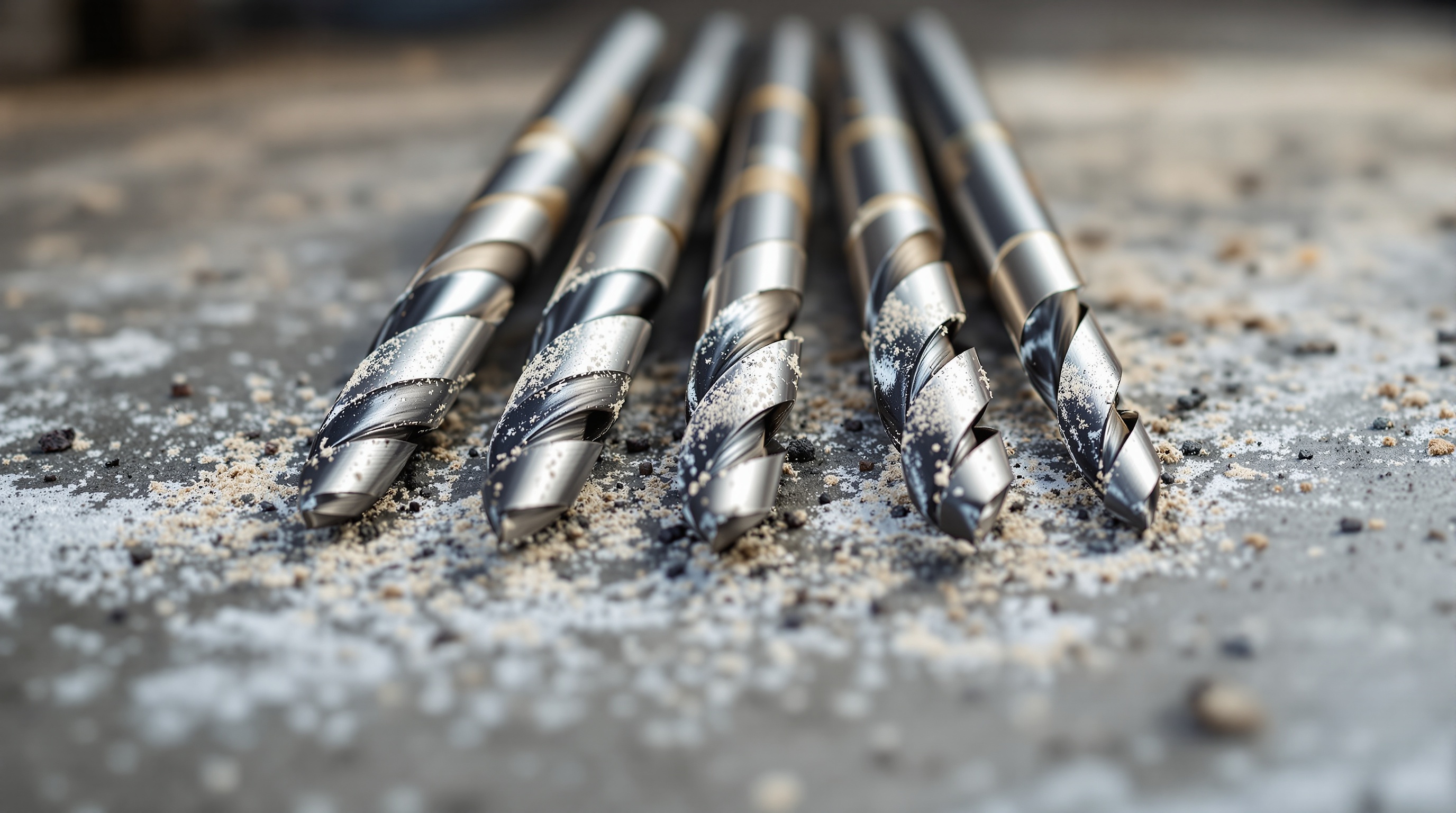
- Use Proper Drilling Hardware: A standard drill will struggle and overheat. Use an SDS-Plus or SDS-Max rotary hammer, and ensure you are picking the right bit for your base material. An out-of-round hole caused by a cheap, walking drill bit will severely compromise holding strength.
Common Mistakes to Avoid
Contractors constantly encounter failed masonry joints caused by basic installation errors. Avoid these common traps:
Ignoring Edge Distance: Mechanical anchors exert immense lateral pressure. Installing a heavy wedge anchor too close to the edge of a concrete slab will cause the concrete to "spall" or blow out sideways. Always adhere to the manufacturer's minimum edge distance requirements — see our spacing and edge distance guide for the full reference table.
Over-Torquing: Hitting a wedge or sleeve anchor with an impact wrench until it stops spinning is a guaranteed way to snap the head off or pull the anchor straight through the expansion clip. Always use a calibrated torque wrench. A standard 1/2-inch wedge anchor typically requires around 40 to 50 ft-lbs of torque, not 200 — or let the Anchor Specification Engine calculate it for you.
Reusing Holes: If an anchor spins or pulls out, you cannot simply drop a new anchor of the same size into the compromised hole. The friction ridges in the concrete have been destroyed. You must step up to the next anchor diameter or relocate the hole entirely.
Rushing Adhesive Cure Time: Loading an epoxy anchor before it's fully cured — especially in cold weather, when cure times extend significantly — can result in a bond that looks set but hasn't reached its rated strength. Always follow the manufacturer's cure schedule for the ambient temperature.
Buying Advice: What Specs Matter
Load ratings aren't the only specifications that dictate your purchase. Fastener metallurgy dictates lifespan.
- Zinc-Plated Carbon Steel: The standard for climate-controlled indoor environments. Will rust quickly if exposed to moisture.
- Hot-Dipped Galvanized (HDG): Coated in a thick layer of zinc for outdoor applications, treated lumber (like sill plates), and damp environments.
- 304 and 316 Stainless Steel: Mandatory for marine environments, coastal builds exposed to salt spray, and highly corrosive chemical applications. They cost significantly more but prevent structural failure due to rust.
Additionally, for commercial projects, always look for anchors carrying a current ICC-ES Evaluation Report. This guarantees the fastener has been independently tested for seismic and structural code compliance — see our guide on how to read an anchor ESR report for what these documents actually contain.
Frequently Asked Questions
Can I use a mechanical anchor and adhesive together for extra strength?
Some specialty products are designed as hybrid systems, but generically combining a standard expansion anchor with epoxy isn't a recognized installation method and isn't covered by either product's ESR rating. If you need adhesive-level performance, use a product specifically tested and rated as an adhesive anchor system.
How do I know if my concrete is "cracked" for the purposes of anchor selection?
For most residential slabs without visible structural cracking, this distinction matters most for anchors near construction joints, control joints, or in older slabs with visible cracking. When in doubt, an anchor rated for cracked concrete (common among adhesive systems and many modern wedge anchors) is the safer choice — see ACI 318-19 explained for more on this distinction.
Is there a fastener that works in literally any concrete condition?
Adhesive anchors come closest — they're rated for cracked and uncracked concrete in most ESR reports and don't depend on expansion against sound material. But they require the longest installation process (cure time) and the most careful hole prep of any option here.
Conclusion
Navigating the various types of concrete fasteners requires strict attention to the base material and the applied load. Respect the physics of concrete: use wedge anchors for heavy point loads in solid slabs, transition to sleeve anchors for unpredictable brick and block, reach for adhesive anchors when vibration, cracking, or edge constraints rule out expansion anchors, and keep a box of concrete screws on hand for rapid, light-duty fastening. Prioritize hole cleanliness, use a rotary hammer for precise drilling, and always adhere to specific torque and cure requirements — or let the Anchor Specification Engine handle the selection and sizing for you.