Cordless vs Corded Drill: 7 Key Differences for Home Use (2026 Guide)
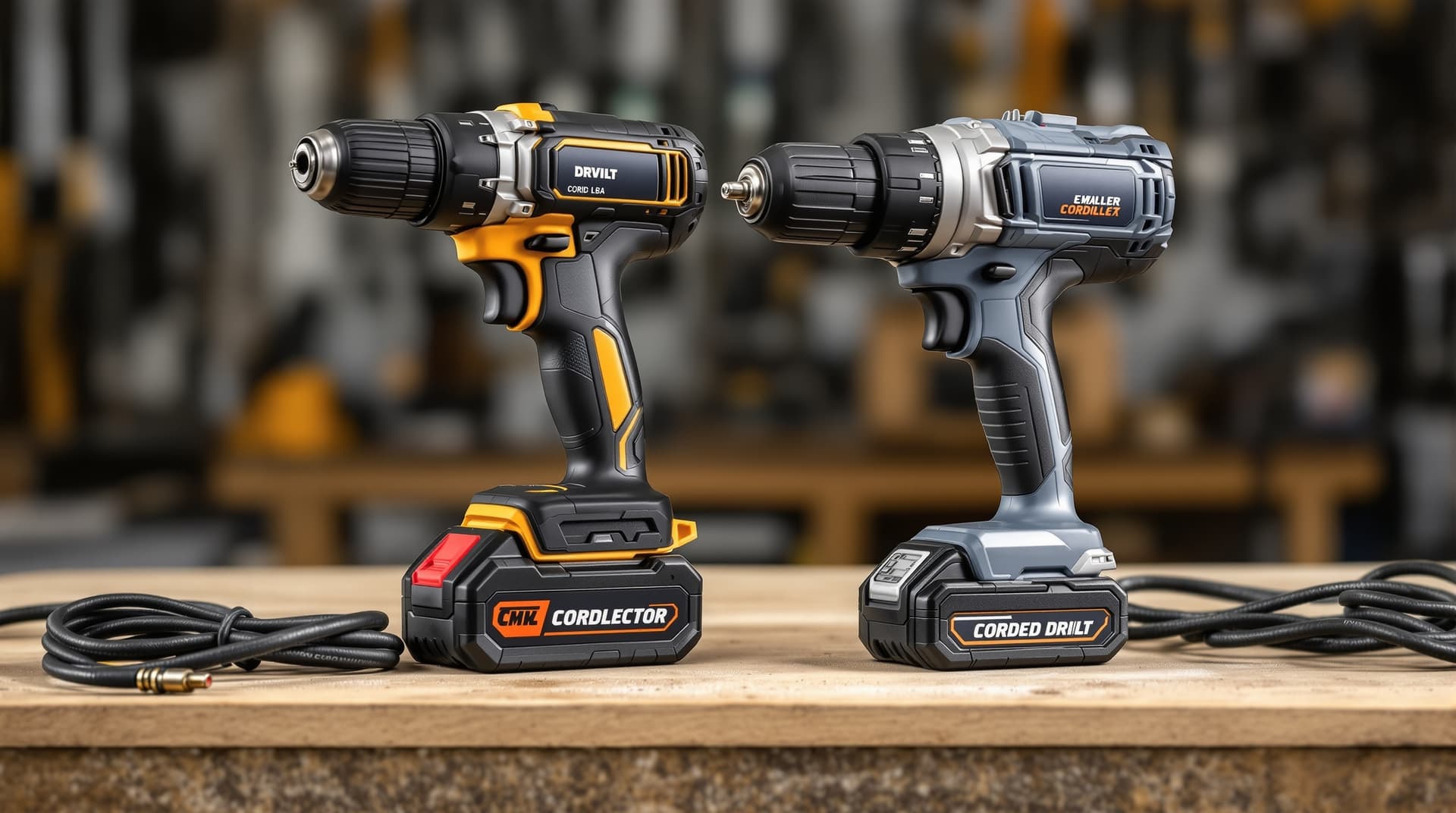
Choosing between a cordless vs corded drill is one of the most common decisions homeowners face when building out their tool kit. Both options can handle everyday tasks, but they excel in very different situations. While cordless technology has advanced massively in recent years, corded drills still hold a critical place on professional job sites and in home workshops alike.
This guide explains the real differences between cordless and corded drills, which one is better for home use, and how to choose the right power tool for your specific projects without overspending on features you don't need.
Quick Decision Table
| Factor | Corded Wins | Cordless Wins |
|---|---|---|
| Sustained heavy-duty use (mixing, hole saws, all-day drilling) | ✓ Infinite runtime, no stalling | |
| Peak torque (premium tools) | ✓ Top 18V/20V brushless models often exceed corded peak torque | |
| Mobility / working away from outlets | ✓ No cord, no extension cord hazards | |
| Tool weight for overhead/ladder work | ✓ No battery weight | |
| Smart features (clutch electronics, anti-kickback, app control) | ✓ Most R&D goes into cordless platforms | |
| Long-term storage / infrequent use | ✓ No battery degradation over years | |
| Upfront cost (single tool) | ✓ Cheaper without battery/charger | |
| Long-term value (building a tool ecosystem) | ✓ Bare tools share batteries across platform |
Overview: Corded vs Cordless Drills
At their core, both tools perform the exact same basic function: rotating a bit to bore holes or drive fasteners. The difference lies in their power delivery systems and internal motor designs.
Corded Drills: Powered by a standard 120V AC wall outlet, these drills rely on continuous electrical current. Their power is measured in Amps (typically ranging from 5 to 9 amps for home models, and up to 13 amps for heavy-duty professional mixing or core drills). Because they draw steady power from the grid, they do not suffer from voltage drops or battery fade.
Cordless Drills: These drills run on rechargeable DC battery packs, exclusively lithium-ion (Li-Ion) in modern tools. Power is generally classified by voltage—most commonly 12V for compact tools and 18V/20V Max for standard-duty to heavy-duty tools. Modern cordless drills almost exclusively feature brushless motors, which are highly efficient and maximize runtime by eliminating the physical friction of carbon brushes.
When to Use Each Type
Determining which drill to pull out of the toolbox depends entirely on the application at hand.
When to use a corded drill: Corded models are ideal for high-torque, continuous applications that would drain a battery in minutes. If you are mixing drywall mud or thinset, drilling 1-inch spade bits through thick framing lumber all day, or tackling continuous masonry work where you need a hammer mechanism for concrete anchors, the infinite runtime of a corded drill is unbeatable.
When to use a cordless drill: A cordless drill is the undisputed king of mobility. It is the best choice for basic home DIY jobs, hanging drywall, installing cabinetry, or working outdoors away from a power outlet. If you are climbing a ladder to install a light fixture or squeezing into a tight attic space, you want a cordless drill.
7 Key Differences for Home Use
1. Power and Torque Output
There is a persistent myth that corded drills are always more powerful. In 2026, premium 18V and 20V Max brushless cordless drills frequently out-power their corded counterparts in terms of peak torque. High-end cordless drills can deliver over 1,200 in-lbs of torque, enough to snap your wrist if it catches. However, corded drills excel at sustained RPMs under heavy loads. A corded drill will maintain its top speed without stalling when pushing a heavy hole saw through hardwood. If you are confused about power ratings, calculating the actual RPM and torque requirements of your typical projects will point you in the right direction.
2. Run Time and Downtime
The biggest advantage of a corded drill is infinite runtime. As long as the power grid is functioning, the tool will spin. Cordless drills are limited by their battery's amp-hour (Ah) rating. A standard 2.0Ah battery might drive a few hundred screws, but will deplete rapidly if you are drilling into metal or using a hole saw. While rapid chargers can mitigate downtime, a dead battery stops work completely if you do not have a backup ready.
3. Portability and Convenience
Cordless drills win the convenience category flawlessly. You can grab a cordless drill and instantly sink a screw into a loose deck board in the backyard without running 100 feet of extension cord. Cords snag on furniture, wrap around ladder legs, and create frustrating tripping hazards on crowded job sites or messy garage floors.
4. Tool Weight and Ergonomics
It might sound counterintuitive, but a corded drill is often lighter than an equivalent heavy-duty cordless drill. A massive 5.0Ah or 8.0Ah lithium-ion battery adds significant weight (often 1.5 to 2.5 pounds) to the base of a cordless tool. A standard corded 3/8-inch drill is generally lightweight and very easy to maneuver, making it less fatiguing for prolonged overhead work.
5. Advanced Features and Technology
Because the power tool industry's research and development money is poured almost entirely into battery platforms, cordless drills feature vastly superior technology. Modern cordless tools feature electronic torque clutches, anti-kickback sensors that stop the drill if the bit binds, customizable RPM settings via Bluetooth apps, and ultra-bright LED work lights. Most corded drills remain purely mechanical, featuring little more than a trigger and a forward/reverse switch.
6. Lifespan and Storage
If you only use a drill once a year to hang a picture frame, a corded drill is the better investment. Lithium-ion batteries degrade over time, even when not in use. A battery pack sitting in a hot garage or freezing shed might barely hold a charge after 4 to 5 years. A well-built corded drill, however, can sit on a shelf for a decade, be plugged in, and run as perfectly as the day it was manufactured.
7. Price and Overall Value
A high-quality corded drill is significantly cheaper up front. You can purchase a professional-grade corded drill for half the cost of a premium cordless drill kit. However, buying a cordless drill gets you a battery and charger, plugging you into an ecosystem. Once you own the batteries, you can purchase "bare tools" (like circular saws, string trimmers, or impact drivers) on that same battery platform for a much lower cost.
Pro Tips for Homeowners
- Match your extension cord to the tool: If you are using a 9-amp corded drill 100 feet from an outlet, do not use a cheap 16-gauge cord. You will experience voltage drop, which forces the motor to run hot and eventually burns out the tool. Use a 12-gauge extension cord for high-draw tools over long distances.
- Store batteries at room temperature: Extreme heat and freezing temperatures kill lithium-ion cells. Keep your cordless batteries in an insulated part of the house, not a freezing shed, to maximize their lifespan.
- Keep an eye on the chuck: Pay attention to choosing the proper chuck capacity. Most compact drills come with a 3/8-inch chuck, which is fine for everyday use. If you plan to use large hole saws, auger bits, or thick mixing paddles, you absolutely need a 1/2-inch chuck.
Common Mistakes to Avoid
One of the biggest mistakes DIYers make is blaming their drill when the real issue is dull or improper accessories. Buying the most powerful 20V brushless drill on the market won't help you drill into concrete if you are using a dull wood bit. Putting too much body weight behind the tool instead of letting the motor do the work is the leading cause of ruining your expensive bits with excessive heat and snapping them in the hole.
Another common trap is overbuying voltage. Homeowners often assume they need a massive 1/2-inch, 20V hammer drill for assembling flat-pack furniture or hanging curtains. Overpowered drills are heavier, bulkier, and harder to fit into tight cabinet spaces. A high-quality 12V cordless drill is often the much smarter choice for 90% of indoor homeowner tasks.
Expert Buying Advice
If you are a new homeowner building your first tool kit, buy a quality 18V or 20V Max cordless drill kit from a reputable brand (such as DeWalt, Makita, Milwaukee, or Ryobi). The sheer convenience and the ability to expand your tool collection using the same batteries make the cordless route the most practical choice for modern homeownership. See our best drill for DIY projects roundup for specific recommendations.
However, if you are a casual DIYer who only does a project every eight months, or if you are setting up a dedicated woodworking bench where the drill never leaves a five-foot radius, a corded drill is an incredibly smart, budget-friendly buy that will literally last you a lifetime.
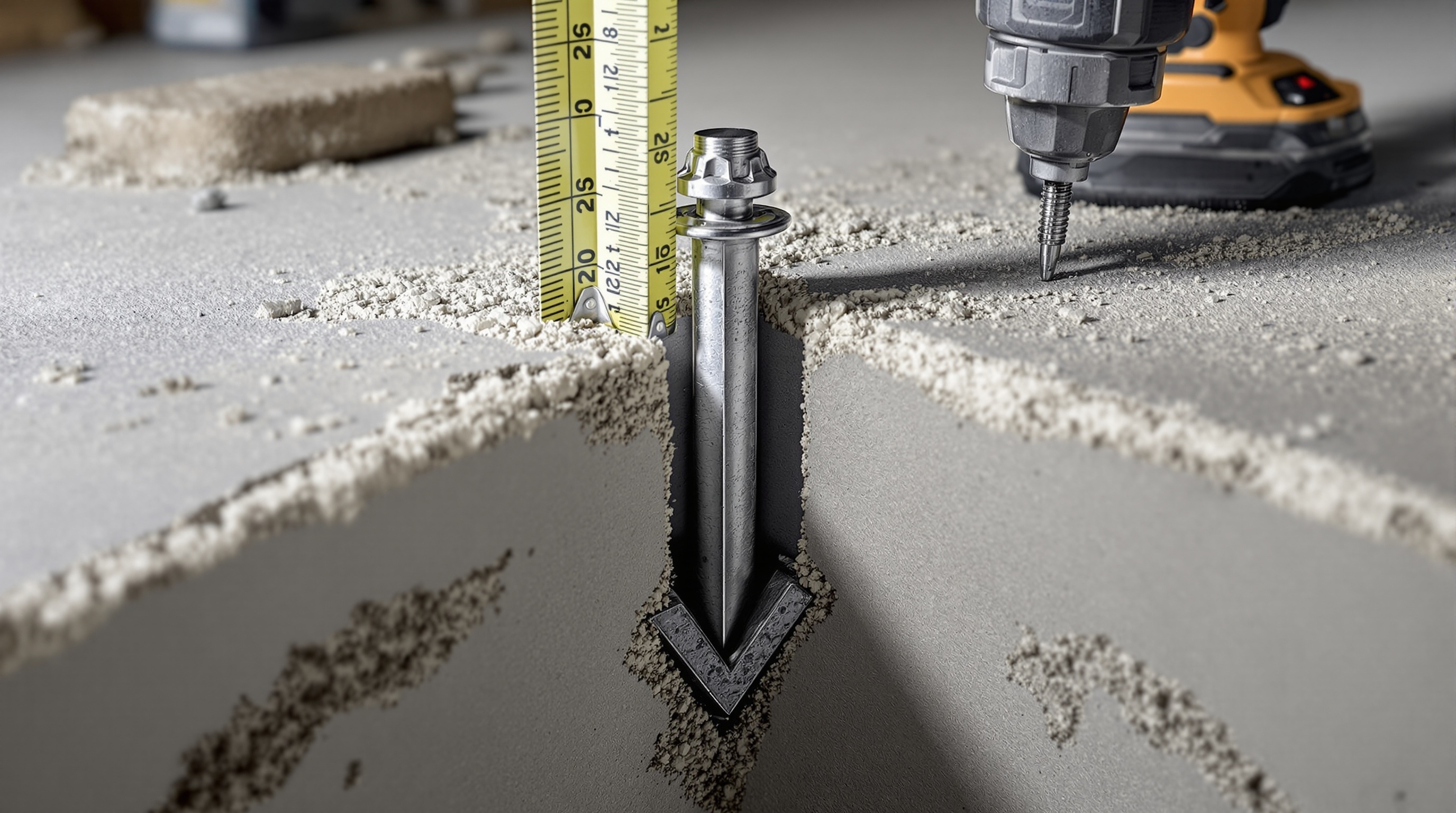
If your projects involve drilling into concrete or masonry — anchors, conduit, fixtures — the cordless-vs-corded decision shifts: see our best drills for concrete walls and best hammer drill for home use guides, since hammer-drill functionality (available in both corded and cordless formats) matters more than the power source for that use case.
Frequently Asked Questions
Can a cordless drill really replace a corded drill for everything?
For the vast majority of home DIY tasks — drilling pilot holes, driving screws, hanging shelves and TVs, light masonry work with a cordless hammer drill — yes. The remaining cases where corded still has a clear edge are sustained heavy-duty tasks (mixing large batches of mortar or joint compound, repetitive large-diameter hole sawing) where battery swaps would become a real interruption.
Do I need both a drill/driver and an impact driver, or does one tool do both jobs?
Many cordless drill/drivers can drive screws adequately for light work, but an impact driver's rotational "hammering" action makes it dramatically better for long screws, lag bolts, and dense material — see our structural screws vs. lag bolts guide for an example of where this matters. Most serious DIYers end up with both, often as a combo kit sharing the same battery platform.
How many batteries should I buy with a cordless drill?
At minimum, two — so one can charge while the other is in use. For projects with heavy continuous draw (large hole saws, mixing paddles, long sessions of concrete anchor work), a higher-capacity battery (4.0Ah-6.0Ah or larger) extends runtime significantly compared to the smaller 1.5-2.0Ah batteries often bundled with starter kits.