What Drill Power Do You Really Need? (RPM, Torque & Voltage Explained)
Demystifying Drill Specifications: The Holy Trinity of Power
Drill manufacturers love to plaster their packaging with impressive numbers—18V, 2,000 RPM, 1,200 in-lbs of torque. But when you are standing in the tool aisle or comparing models online, these specifications can easily blur together. Many buyers end up overpaying for a heavy, contractor-grade tool they will rarely push to the limit, while others buy an underpowered drill that struggles to drive a basic lag bolt.
To choose the right tool for your specific needs, you have to understand the three core metrics of drill power: Voltage, Torque, and RPM. This guide breaks down what these numbers actually mean in the real world, how they interact, and how to apply them to your daily projects.
What It Is: Understanding Voltage, Torque, and RPM
To understand how a drill performs, it is best to compare it to a vehicle. Every component plays a distinct role in how power is generated and delivered to the material.
Voltage (V): The Size of the Engine
Voltage dictates the total amount of electrical power available to the drill's motor. Simply put, higher voltage means a larger "engine" capable of performing heavier work without stalling. Today, the market is primarily split into two categories: 12V and 18V/20V systems.
- 12V Systems: These are compact, lightweight, and perfect for working in tight spaces like cabinet interiors. Modern 12V platforms (like the Milwaukee M12 or Bosch 12V Max) punch far above their weight class, handling 80% of standard household tasks.
- 18V / 20V Max Systems: This is the professional standard. Important note: 18V and 20V Max are exactly the same thing. "20V Max" is simply the initial voltage measured right off the charger, which settles to a nominal 18V under load. Brands like DeWalt and Black+Decker use 20V Max for marketing, while Makita and Milwaukee use 18V.
Torque (in-lbs): The Muscle
Torque is the actual twisting force the drill applies to the fastener or drill bit. Measured in inch-pounds (in-lbs) or Newton-meters (Nm), torque is what allows a drill to power a thick screw into dense hardwood. A basic 12V drill might offer 250 in-lbs of torque, which is fine for drywall screws. A premium 18V brushless drill, however, can deliver over 1,200 in-lbs, allowing it to drive massive structural screws or power large hole saws through framing lumber.
RPM (Revolutions Per Minute): The Speed
RPM measures how fast the chuck spins. Speed is critical for drilling clean holes, as the cutting edges of the bit need velocity to sheer away material efficiently. Most standard power drills max out around 1,500 to 2,200 RPM.
Key Differences: The Inverse Relationship of Speed and Torque
One of the most important concepts to grasp is that your drill cannot deliver maximum speed and maximum torque at the same time. This is why almost all modern drills feature a mechanical two-speed gearbox, usually controlled by a switch on top of the tool.
- Gear 1 (Low Speed, High Torque): Operates from 0 to about 400 or 500 RPM. The internal gears step down the motor's speed to multiply the twisting force.
- Gear 2 (High Speed, Low Torque): Operates from 0 to roughly 1,500 or 2,000 RPM. This gear sacrifices twisting force to achieve maximum rotation speed.
When to Use High RPM vs. High Torque
Matching your drill's gear setting to your application is what separates professionals from amateurs.
When to Use High RPM (Gear 2)
Speed is for making holes. When you are using standard twist bits or spade bits in wood, plastic, or light-gauge metal, you want High Speed. The velocity helps the bit eject wood chips quickly and leaves a cleaner edge. If you try to drill a small hole in low gear, the bit is more likely to bind, grab, or leave a jagged hole. If you find your bits frequently getting ruined, understanding speed control is the first step to prevent your bits from snapping or burning up.
When to Use High Torque (Gear 1)
Torque is for driving fasteners and turning large accessories. Switch to Gear 1 when driving heavy lag bolts, using massive auger bits, or drilling into brick or block where grunt matters more than speed. If you try to drive a 3-inch screw into a 2x4 while in Gear 2, the drill will likely stall, or the bit will cam out and strip the screw head.
Pro Tips for Maximizing Drill Performance
Contractors know that raw numbers on a box only tell half the story. Real-world performance relies heavily on how you operate the tool and the accessories you attach to it.
- Invest in Brushless Motors: If your budget allows, always choose a brushless drill. Traditional brushed motors run on mechanical friction, which generates heat and wastes battery life. Brushless motors use an electronic circuit board to deliver power dynamically. They adjust their torque and RPM based on the resistance they sense, offering up to 50% more runtime and a longer tool lifespan.
- Battery Amp-Hours (Ah) Matter: Voltage is the size of the engine, but Amp-Hours (Ah) are the size of the gas tank. A 5.0Ah battery won't just run longer than a 2.0Ah battery; it can physically deliver more sustained current to the motor under heavy load, preventing the drill from bogging down.
- Respect the Chuck Capacity: Don't try to force massive bits into a smaller tool. Generally, 12V drills feature a 3/8-inch chuck, while 18V/20V drills use a more robust 1/2-inch chuck. Familiarize yourself with understanding drill chuck sizes so you buy the right accessories for your specific tool.
- Upgrade Your Bits: The most powerful drill in the world is useless with cheap, dull accessories. To get clean, fast results without straining your tool's motor, invest in high-quality bits designed specifically for wood, metal, or masonry.
Common Mistakes When Managing Drill Power
Even seasoned DIYers fall into traps that can prematurely burn out a drill's motor or ruin the workpiece.
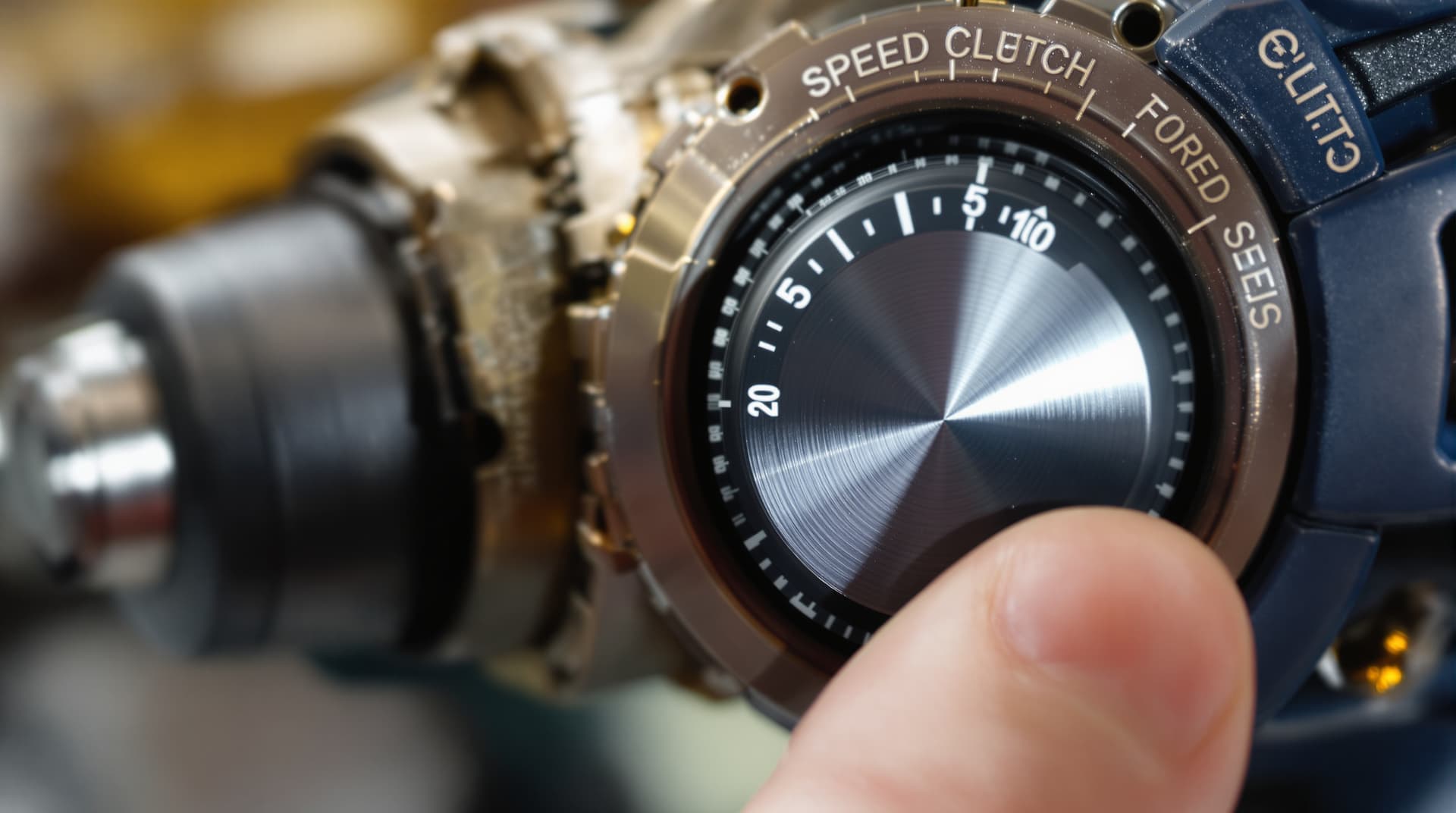
- Ignoring the Adjustable Clutch: That numbered ring behind the chuck is the clutch. It allows you to dial down the torque so the drill stops turning once a screw is seated. Leaving the drill on the "Drill" setting (maximum continuous torque) when assembling delicate furniture or installing drywall will result in over-driven screws and damaged materials.
- Pushing Too Hard: When drilling a difficult hole, many people push their body weight into the back of the drill. This bogs down the RPMs and overheats the motor. Let the speed of the drill and the sharpness of the bit do the cutting.
- Using the Wrong Gear for the Job: As mentioned above, driving thick screws in Gear 2 will overheat the motor, while drilling small holes in Gear 1 will result in tear-out and sloppy holes. Always switch gears appropriately.
Buying Advice: What Specs Do You Actually Need?
You don't need a heavy-duty contractor drill to hang a picture frame, but you also shouldn't rely on a weak budget drill to build a multi-level deck. Here is how to match the specs to your needs:
The Casual DIYer (Light Repairs and Assembly)
If your primary tasks involve building flat-pack furniture, hanging curtain rods, or mounting small shelves, look for a 12V drill. You only need around 250 to 350 in-lbs of torque and a max speed of 1,200 to 1,500 RPM. These tools are light, easy on the wrist, and store effortlessly in a kitchen drawer.
The Serious Homeowner (Renovations and Yard Projects)
If you are building fences, repairing decks, or framing basement walls, step up to a Compact 18V/20V Brushless drill. Look for specs in the range of 400 to 600 in-lbs of torque and up to 1,800 RPM. This is the sweet spot for 90% of users, offering professional-level reliability without extreme weight. For a deeper dive into specific models, check out our guide on choosing the ultimate drill for around the house.
The Professional/Contractor (Heavy-Duty Applications)
If you are rough framing, mixing joint compound, or drilling dozens of large-diameter holes with hole saws and augers daily, you need a Premium 18V/20V Heavy-Duty drill. Expect 800 to 1,400+ in-lbs of torque and speeds exceeding 2,000 RPM. These tools typically come with an auxiliary side handle to prevent wrist injuries when the high torque kicks in.
Conclusion
Understanding drill power doesn't require an engineering degree. Just remember the basic hierarchy: Voltage determines your tool's overall capability, torque provides the twisting strength for driving and boring, and RPM delivers the speed necessary for clean drilling. By matching these specifications to the physical demands of your projects—and utilizing the gearbox and clutch correctly—you will work faster, protect your materials, and significantly extend the lifespan of your power tools.